Under California Code of Civil Procedure §335.1, you have two years from the date of a car crash in Los Angeles to file a personal injury claim. California is a fault state, so the at-fault driver's insurer pays for medical bills, lost wages, and pain and suffering. Burg & Brock has handled auto accident cases across LA County since 1996 and works on contingency, meaning no fee unless you recover. Call (818) 873-9216 for a free case review.
The Law Offices of Burg & Brock has successfully handled thousands of auto accident cases on behalf of clients from all walks of life and throughout Southern California. A Car Accident Attorney Los Angeles knows that the experience of being in a serious collision can be shattering in many ways, typically including a great deal of both physical and emotional pain. Our goal is to handle each case with the sensitivity clients need, as well as the professionalism necessary for all types of legal work. Auto accident attorneys at our offices work to make sure that clients’ interests are seen to at all times.

First and foremost, make sure everyone involved in the accident is safe, and that definitely includes you. Call 911 right away if anyone injured in the accident requires any kind of medical attention. Equally important, make sure that no one is in active danger. Many fatal accidents happen after people get out of their cars on busy roadways following a less severe collision. If you initially assume you’re not hurt, but then start to think maybe you were, do not wait to seek medical attention.
First and foremost, make sure everyone involved in the accident is safe, and that definitely includes you. Call 911 right away if anyone injured in the accident requires any kind of medical attention. Equally important, make sure that no one is in active danger. Many fatal accidents happen after people get out of their cars on busy roadways following a less severe collision. If you initially assume you’re not hurt, but then start to think maybe you were, do not wait to seek medical attention.

Once you and your vehicle are in a safe place, do your best to take pictures of the accident scene and of damage to all vehicles involved. Of course, you and the other party must exchange insurance and contact information. If there any other people who witnessed the accident, also get their contact information along with their account of what happened. If you can, write it down in as much detail as possible or ask the person if you can record their voice on your cell phone. This is often crucial in avoiding a “he said/she said” situation if at fault parties refuse to acknowledge their responsibility.
As soon as all parties are safe, call an attorney. It’s always best to start protecting your legal interests as early as possible. California law allows for up to two years following an accident to file a claim, but it’s nearly always advantageous to start the process as soon as possible.
If you’ve been in a serious accident where another driver is responsible, having the services of a competent attorney on your side is beneficial in most cases. At-fault parties, their insurance companies, and their insurance companies’ lawyers are often determined to minimize the amounts they pay to injured parties. A car accident attorney Los Angeles accident victims and their families can trust is one who has the years of experience and in-depth knowledge it takes to protect an individual’s interests.

Cameron Yaddidi Brock is known throughout the nation as the car accident attorney Los Angeles and Southern California residents turn to. Mr. Brock and his team of experienced personal injury specialists have handled thousands of car accident cases. We have recovered over $1 billion on behalf of our clients.

The Law Offices of Burg & Brock is comprised of skilled litigators who are not afraid to take a case to court, but who can also provide outstanding settlements in cases where that route is most productive. Insurance companies know that a Los Angeles personal injury attorney who is willing to go to court with a strong case will not accept an offer that is too low.

We work on a contingency fee basis; we do not get paid until our clients have obtained money from a legal judgment or settlement.
Legal cases are complex and many factors can play a role in how they are resolved. A Los Angeles auto accident attorney from the Law Offices of Burg & Brock can help you speak accurately and carefully about an incident. We can also help we provide counsel and assistance on a variety of important matters, including making sure that medical evidence is obtained.
No two collisions are exactly the same. The only way to find out if your situation calls for a serious legal effort by an auto accident attorney is to take advantage of free initial consultation here at the Law Offices of Burg & Brock. There, we'll take a close look at the case and see whether or not legal representation makes sense in this instance.
The law is no place for amateurs. The only way to be sure that you’re interests are being protected is to contact a lawyer as soon as possible.
If you have recently suffered a serious traumatic injury, or if a loved one has been badly injured, then in all likelihood you are experiencing one of the most difficult chapters of your life. If someone close to you has been killed in an accident, then the emotional and psychological stress will be that much heavier. Moreover, there is a real risk for people in traumatic accidents of PTSD (post-traumatic stress disorder), and the National Institute of Mental Health lists accidents as one of the most frequent causes of all this all too common and very serious disorder. The financial stress of medical bills, the temporary or permanent inability of the victim to earn income, and just the standard expenses that come with living in Southern California can create a serious financial bind. They certainly can make the idea of obtaining the help of an attorney seem completely out of reach. It’s not.
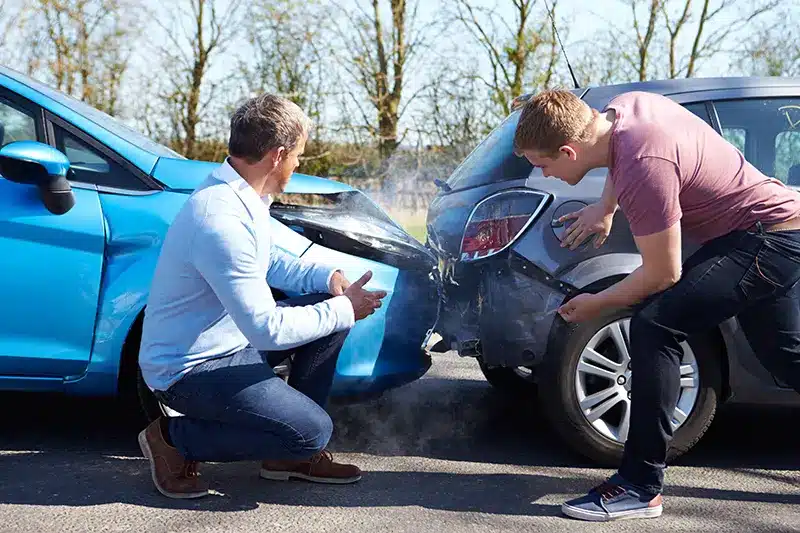
The important thing to realize is that legal help can be obtained without expensive legal fees. At the Law Offices of Burg & Brock, we’re here to make the help of a car accident lawyer in Los Angeles accessible to clients from all levels of income and walks of life. If your situation involves an accident that was caused by the negligence of another party, do not rule out obtaining legal assistance until you’ve spoken with a reputable auto accident attorney like one of the legal specialists here at the Law Offices of Burg & Brock.
However complex you might think it is for a victim to get a fair shake from responsible parties and their insurers, it’s probably even more complex than that. One important reality has to do with the assets of possible defendants and the amount of insurance they carry. People and businesses generally get only the legal minimum of insurance coverage or just enough to protect their assets. So, for example, a middle-aged homeowner is likely to carry more insurance than a college student. Drivers for ridesharing companies like Uber and Lyft, for example, typically carry $1 million worth of insurance coverage. The help of a skilled attorney can make an important difference in ensuring that victims receive truly fair compensation.
Car-crash work overlaps with truck, motorcycle, rideshare, and pedestrian claims. The pages below cover the variants and Los Angeles-area communities where our team handles auto cases.
Talk to one of our attorneys: Cameron Yadidi Brock · Artin Fiterz, Esq. · Greg Diarian · Craig D. Rackohn · Lena G. Karaminassian · Isaac Radnia
Auto accident claims in California are anchored by Civil Code section 1714, which establishes the general duty to use reasonable care in conducting one's activities, including driving. The California Vehicle Code codifies the rules of the road; common bases for liability include CVC section 22350 (basic speed law), CVC section 21703 (following too closely), and CVC section 22107 (unsafe lane change). Read the full Vehicle Code at leginfo.legislature.ca.gov.
The personal injury limitations period is set by Code of Civil Procedure section 335.1 at two years. Claims against a city, county, or other public entity require a written claim within six months under the Government Claims Act (Gov. Code section 911.2). Minimum financial responsibility for drivers is fixed by Insurance Code section 11580.1b at $15,000 per person and $30,000 per accident, with $5,000 in property damage. Many injury cases also turn on uninsured and underinsured motorist coverage governed by Insurance Code section 11580.2, which requires carriers to offer UM/UIM coverage in matching limits.
Damages in auto cases are shaped by Howell v. Hamilton Meats & Provisions, Inc. (2011) 52 Cal.4th 541, which held that an injured plaintiff cannot recover the difference between billed medical charges and the lower amount actually paid by their health insurer. The decision sharply limits the past-medical-bills line item and forces plaintiffs to focus on the negotiated, paid amounts. Pebley v. Santa Clara Organics, LLC (2018) 22 Cal.App.5th 1266 partially distinguished Howell for plaintiffs who treat outside their own insurance, allowing reasonable-value evidence in those situations.
Comparative fault is governed by Li v. Yellow Cab Co. (1975) 13 Cal.3d 804, which adopted pure comparative fault and ended the all-or-nothing contributory-negligence bar. Under Civil Code section 1431.2 (Proposition 51), defendants are jointly and severally liable for economic damages but only severally liable for non-economic damages in proportion to fault. In product-defect cases involving the vehicle itself, Soule v. General Motors Corp. (1994) 8 Cal.4th 548 sets the consumer-expectation versus risk-benefit test for design defects. Verify each citation at Justia California Case Law.
California Code of Civil Procedure section 335.1 gives most adult auto accident plaintiffs two years from the crash to file suit for personal injury. Property-damage claims have a three-year window under section 338. Cases against a city, county, or state agency require a written government claim within six months of the incident under the Government Claims Act, and a lawsuit must follow within six months of the rejection. Minors generally have until two years after their 18th birthday. These deadlines are strict and missing them typically forfeits the case.
No. California is a fault-based state, which means the driver who causes a crash is responsible for the resulting injuries and property damage. Each driver is required to carry liability insurance under Insurance Code section 11580.1b, with minimums of $15,000 per person and $30,000 per accident. Injured parties can pursue the at-fault driver directly, file a claim through their own uninsured motorist coverage, or sue a third party such as a vehicle manufacturer or municipal entity that contributed to the crash. Med-pay coverage is optional, not mandatory.
Uninsured motorist coverage governed by Insurance Code section 11580.2 steps in when the at-fault driver carries no liability insurance, and underinsured motorist coverage applies when their limits are exhausted. UM/UIM claims are made against the injured person's own carrier and behave like a third-party claim, often requiring arbitration to resolve. Carriers must offer UM/UIM coverage in matching limits unless the policyholder rejects it in writing. Stacking is generally not permitted in California, but each separate vehicle on a household policy may carry independent coverage.
Yes. California does not cap non-economic damages such as pain, suffering, emotional distress, loss of enjoyment of life, and inconvenience in ordinary auto cases. Unlike some states, there is no statutory threshold for severity. Civil Code section 1431.2 limits joint liability for non-economic damages, so each defendant pays only their share. Plaintiffs document non-economic harm with treatment records, day-in-the-life evidence, family testimony, and expert reports. Catastrophic injuries such as traumatic brain injuries and spinal cord injuries routinely support seven-figure non-economic awards.
Yes, but it is not barred. Under Li v. Yellow Cab Co., California uses pure comparative fault: a plaintiff found 30 percent at fault recovers 70 percent of their damages, and even a plaintiff 90 percent at fault recovers the remaining 10 percent. Insurance adjusters routinely argue comparative fault to reduce settlement value, often pointing to speed, lookout, or seat-belt use. Counter-evidence comes from accident reconstruction, dashcam and surveillance video, vehicle EDR (event-data-recorder) downloads, and witness statements collected promptly after the crash.
Health insurers, ERISA plans, Medi-Cal, and Medicare typically assert liens or reimbursement rights against any settlement. Medi-Cal and Medicare are governed by federal law and require pre-settlement notice. Howell v. Hamilton Meats limits past-medical recovery to amounts paid, not amounts billed, and Pebley v. Santa Clara Organics carves out plaintiffs who treat outside their insurance. Lien resolution often involves negotiated reductions of 25 to 50 percent at settlement. Hospital and provider liens under Civil Code section 3045 also need to be addressed before disbursement.
Product liability claims may run alongside the driver-negligence case. California uses two design-defect tests under Soule v. General Motors: the consumer-expectation test for ordinary safety expectations and the risk-benefit test for complex designs. Common targets include defective airbags, tires, seat backs, fuel systems, and electronic stability control. Manufacturer claims preserve the vehicle in its post-crash condition for inspection and require expert engineers. These claims often add several defendants and significantly expand recoverable damages, particularly for serious injuries or deaths.
Straightforward soft-tissue cases with clear liability and modest treatment frequently resolve in three to nine months once treatment concludes. Cases involving disputed liability, surgery, or contested damages routinely take 12 to 24 months and may require filing a lawsuit. After suit is filed, Los Angeles Superior Court typically sets trial 12 to 18 months out, with mediation in the months before trial driving most settlements. Catastrophic-injury cases involving multiple defendants or commercial carriers can take 24 to 36 months to resolve.
Generally no, not without speaking to an attorney first. The other carrier's adjuster is trained to ask questions designed to lock the injured party into early statements before the full extent of injury and fault is known. California law does not require a claimant to give a recorded statement to a third-party insurer. Statements to your own carrier are usually required by the cooperation clause of your policy, but even those benefit from advance preparation. Anything recorded can be used to limit recovery later.
Past lost wages are documented with pay stubs, tax returns, and an employer letter confirming missed time and rate of pay. Self-employed plaintiffs use Schedule C and 1099 records, and irregular earners use a multi-year average. Future lost earning capacity, when supported by medical work restrictions, is calculated by a vocational expert and reduced to present value by an economist. Loss of household services and lost benefits such as employer-paid health insurance and retirement contributions can also be recovered as part of the wage loss.
When a driver is acting within the course and scope of employment, the employer is vicariously liable under the doctrine of respondeat superior. Independent claims for negligent hiring, supervision, and retention may also lie under Diaz v. Carcamo. Commercial drivers carry far higher policy limits than personal lines, often $1 million or more, and the case may also reach a personal umbrella policy. Identifying the employer early is critical because preservation letters for vehicle data, dispatch logs, and HR records must go out promptly.
Most California auto cases settle before trial, but the credible willingness to try the case drives settlement value. Carriers track outcomes and adjust offers based on the lawyers handling the file. Filing suit, taking targeted depositions, and pushing through the mandatory settlement conference frequently moves a stalled claim. When a fair offer is on the table, accepting it makes sense; when the offer is below value, the trial path remains open. Mediation, arbitration, and high-low agreements are all common settlement tools.
| Severity Tier | Typical Injuries | Settlement Range |
|---|---|---|
| Tier 1 — Minor | Soft tissue, no surgery, brief treatment | $10,000 — $35,000 |
| Tier 2 — Moderate | Disc bulge, injections, chiropractic and PT | $35,000 — $125,000 |
| Tier 3 — Serious | Fractures, single surgery, lasting impairment | $125,000 — $500,000 |
| Tier 4 — Severe | Multiple surgeries, permanent disability | $500,000 — $2,500,000 |
| Tier 5 — Catastrophic | TBI, spinal cord, paralysis, wrongful death | $2,500,000+ |
Past results do not guarantee future outcomes. Each case is unique and case results depend on a variety of factors.
Cases filed in Los Angeles County are routed by the location of the incident and the residence of the parties. Most personal injury filings are handled at the Stanley Mosk Courthouse at 111 N. Hill Street, which serves as the central civil hub. West-side incidents may be filed at the Santa Monica Courthouse, while events in the eastern San Fernando Valley typically route to the Van Nuys Courthouse East. South Bay matters proceed at the Torrance Courthouse, and South-Central LA cases are handled at the Compton Courthouse. Long Beach and the surrounding ports route to the Governor George Deukmejian Courthouse. Federal claims, including those involving federal preemption or diversity jurisdiction, are filed in the U.S. District Court for the Central District of California.
This page is reviewed by Cameron Yadidi Brock, founding partner of Burg & Brock and lead trial counsel on auto and catastrophic-injury matters. He has tried cases throughout Los Angeles Superior Court and recovered eight-figure verdicts and settlements for crash victims. Cameron focuses on cases involving disputed liability, commercial vehicles, and serious orthopedic and neurological injuries, and he coordinates with treating physicians, accident reconstructionists, and vocational experts to document the full economic and human cost of the crash.
Cameron Yadidi Brock is admitted in California and verified at Cal Bar #183112. Reviewed by Cameron Yadidi Brock, CA Bar #183112. Last updated: 2026-05-08.
Attorney Advertising. The information on this page is for general educational purposes and is not legal advice. Reading this page does not create an attorney-client relationship. Past results do not guarantee future outcomes.
Settlements vary by injury severity. Soft-tissue cases typically range from $10,000 to $25,000. Moderate cases with surgery or extended therapy run $75,000 to $250,000. Catastrophic cases involving traumatic brain injury or paralysis often exceed $1 million. Burg & Brock has recovered seven and eight-figure verdicts in severe injury cases.
California Code of Civil Procedure section 335.1 gives you two years from the date of the accident to file a personal injury lawsuit. Property damage only is three years under section 338(c). Claims against a government entity require a tort claim notice within six months under Government Code section 911.2.
If you have any injury, missed work, or expect more than $5,000 in medical bills, hire a lawyer. Insurance research shows represented claimants recover two to three times more on average. The consultation costs nothing, and contingency-fee representation means no upfront cost to you.
California follows pure comparative negligence. You can still recover damages even if you were 99% at fault, but your award is reduced by your percentage of fault. If your damages are $100,000 and you are 30% at fault, you recover $70,000.
File under your own uninsured or underinsured motorist coverage. California Insurance Code section 11580.2 makes this coverage standard on every auto policy unless you signed a written waiver. UM/UIM also covers hit-and-run accidents.
Most cases settle within 6 to 18 months. Pre-litigation negotiation takes 60 to 90 days after treatment finishes. If the insurer refuses fair value and we file suit, litigation adds 12 to 24 months. We do not settle before you reach maximum medical improvement.
Burg & Brock works on contingency. You pay nothing upfront and nothing if we do not win. Standard contingency in California personal injury is 33 and 1/3 percent if the case settles pre-litigation and 40% if we file suit. Case costs come out of the settlement.
Compensatory damages cover medical bills (past and future), lost wages and earning capacity, property damage, and pain and suffering. In cases involving drunk driving or extreme negligence, punitive damages may apply under Civil Code section 3294.
No. The adjuster will use it to undercut your claim. Politely decline and refer them to your attorney. You are not legally required to give a recorded statement to the other driver's insurance company.
Catastrophic injury cases need a different level of investigation. Average TBI settlements range from $250,000 to several million depending on long-term care needs. Get evaluated by a neurologist within 24 to 48 hours and document every symptom. Burg & Brock has handled multiple seven-figure brain injury cases.
Choose which categories of cookies and tracking technologies you allow on burgbrock.com. Strictly necessary cookies are always on so the site can function.
Required for the site to load, keep you signed in, and remember your preference choice. Always active.
Lets us see which pages people visit so we can improve the site. No personal data is sold.
Allows ad partners to measure the performance of ads you may have seen and show more relevant ads.
Powers extras like chat, embedded video, and remembered form fields. Turning these off may break some features.