California Code of Civil Procedure §377.60 lets a spouse, domestic partner, child, or other surviving relative file a wrongful death claim when a loved one dies because of another party's negligence. The deadline is generally two years from the date of death under §335.1. A claim can cover funeral costs, lost financial support, and loss of companionship. Burg & Brock has handled wrongful death cases across Los Angeles County since 1996. Call (818) 873-9216 for a free case review.
You are probably asking why would I need a wrongful death lawyer? A Wrongful Death claim is a cause of action which arises from the victim’s death and is brought by the surviving beneficiaries or dependents of the deceased victim.
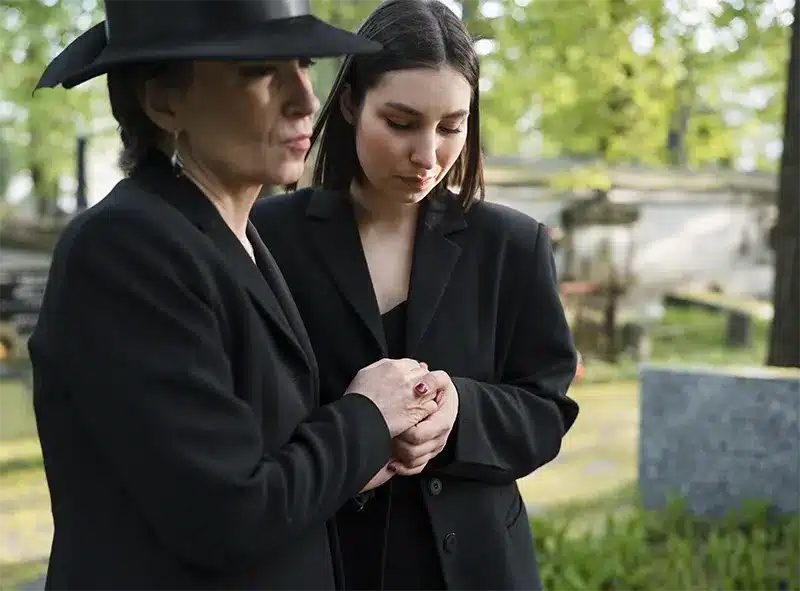
Under California law, in order for an attorney to succeed in a wrongful death lawsuit on behalf of the heirs, the following must be demonstrated:
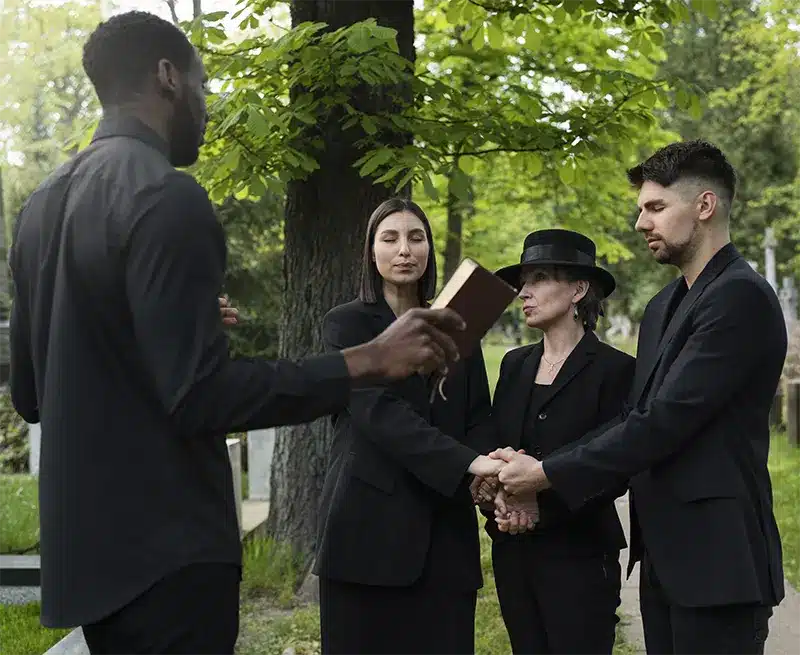
In California the legal heirs under the law may claim to seek wrongful death damages with the following order of precedence:
It is not enough to be able to prove negligence and that the person suffered damage. Usually, most people do not have enough money to pay those damages unless they have insurance. In California, if you do not have automobile insurance, and you are injured by someone else, even if it is their fault, you can only collect your special damages, i.e., your medical expenses and loss of earnings, but not general damages, i.e., your mental suffering and emotional distress. That law was passed to encourage people to drive with insurance. Also, if you do not have automobile insurance, you can lose your driving privilege in California.
Wrongful-death survivor claims under CCP §377.60 reach across most other practice areas. Below are the related claim types and city-specific pages.
Talk to one of our attorneys: Cameron Yadidi Brock · Artin Fiterz, Esq. · Greg Diarian · Craig D. Rackohn · Lena G. Karaminassian · Isaac Radnia
California wrongful death actions are statutory and rest primarily on Code of Civil Procedure section 377.60, which identifies the heirs entitled to bring suit. The companion survival action under Code of Civil Procedure section 377.30 allows the decedent's estate to recover damages the decedent could have recovered had they lived, including pre-death pain and suffering after AB 35 took effect in 2022. Read the full statutes at leginfo.legislature.ca.gov.
Damages are governed by Code of Civil Procedure sections 377.61 and 377.34. The wrongful death action recovers pecuniary loss to the heirs, including loss of financial support, loss of household services, loss of companionship, and burial expenses. Several liability for non-economic damages applies under Civil Code section 1431.2 (Proposition 51). The personal injury statute of limitations of two years applies under Code of Civil Procedure section 335.1. Punitive damages in survival actions follow Civil Code section 3294.
Krouse v. Graham (1977) 19 Cal.3d 59 established that bystander recovery for negligent infliction of emotional distress is available when a close family member witnesses the fatal injury of a loved one. The decision was refined by Thing v. La Chusa (1989) 48 Cal.3d 644, which set the three-element bystander test still used today: the plaintiff must be present at the scene, contemporaneously aware of the injury-producing event, and closely related to the victim. These claims often run in parallel with the statutory wrongful death action.
Civil Code section 1431.2 (Proposition 51) limits joint liability for non-economic damages to each defendant's percentage of fault. This is significant in wrongful death cases because non-economic damages, including loss of companionship, often dominate the verdict. Punitive damages under Civil Code section 3294 require malice, oppression, or fraud by clear and convincing evidence and are recovered through the survival action by the estate, not through the wrongful death action by the heirs. Confirm citations at Justia California Case Law.
Code of Civil Procedure section 377.60 identifies the heirs eligible to bring a wrongful death claim, beginning with the surviving spouse, domestic partner, and children. If there is no surviving spouse or child, the right passes to the persons entitled to inherit by intestate succession, then to the parents, then to the putative spouse and her children, and to dependent stepchildren. Disputes over heirship are resolved through probate court, and a single action must include all heirs to avoid claim-splitting and statute-of-limitations problems.
Wrongful death under section 377.60 is brought by the heirs to recover their own losses, including financial support, household services, companionship, and funeral expenses. The survival action under section 377.30 is brought by the estate to recover damages the decedent could have recovered, including pre-death medical expenses, lost earnings up to death, property damage, and after AB 35, pre-death pain and suffering for cases filed after January 1, 2022. The two claims typically run together and are tried in a single trial.
The general personal injury statute of limitations of two years applies under California Code of Civil Procedure section 335.1. The clock runs from the date of death, not the date of the underlying injury, in most cases. Public-entity defendants require a six-month government claim under Government Code section 911.2 followed by suit within six months of rejection. Medical malpractice wrongful death has a one-year discovery period under MICRA. Failure to file within the limitations period typically forfeits the claim entirely.
Heirs recover the pecuniary value of the support, services, training, gifts, and inheritance the decedent would have provided, plus the value of love, companionship, comfort, care, assistance, protection, affection, society, moral support, and solace. Funeral and burial expenses are also included. Heirs cannot recover for grief, sorrow, or their own emotional distress as separate elements, although those losses inform the value of lost companionship. The fact-finder values each heir's loss separately based on their relationship with the decedent.
Yes, for cases filed on or after January 1, 2022. AB 35 amended Code of Civil Procedure section 377.34 to allow recovery of pre-death pain, suffering, and disfigurement in survival actions filed during a designated window through 2026. Before AB 35, California was an outlier in barring pre-death pain and suffering in survival actions. The change has substantially increased the value of survival cases involving prolonged conscious suffering between the injury and death, particularly catastrophic burn, brain, and trauma cases.
Punitive damages are not available in the wrongful death action itself by the heirs, but they are available in the survival action by the estate when the plaintiff shows malice, oppression, or fraud by clear and convincing evidence under Civil Code section 3294. Common patterns supporting punitive damages include drunk driving, deliberate hit-and-run, intentional torts, and corporate conduct that disregards known safety risks. Punitive recovery in the survival action becomes part of the estate and is distributed under the decedent's will or by intestate succession.
There is no fixed multiplier or formula. The fact-finder weighs the closeness of the relationship, the decedent's age and life expectancy, the heir's age, the duration of the relationship that would have continued, and the quality of the interactions between the heir and the decedent. Children of a deceased parent typically receive higher non-economic awards than adult heirs. Spouses with long, stable marriages also receive higher awards. Family-history evidence, photographs, journal entries, and testimony from extended family build the relationship narrative.
Each defendant is jointly and severally liable for the heirs' economic damages but only severally liable for non-economic damages in proportion to fault under Civil Code section 1431.2. The fact-finder allocates fault among the defendants and any non-party tortfeasors. Settlements with one defendant reduce the verdict against non-settling defendants under the good-faith settlement procedure of Code of Civil Procedure section 877. Identifying every potentially responsible party early is essential to maximize recovery and avoid empty-chair allocation problems at trial.
Yes. Code of Civil Procedure section 377.60 expressly includes registered domestic partners among the heirs entitled to bring suit. The domestic partner has the same standing as a surviving spouse and recovers the same categories of damages. Putative spouses, who reasonably believed they were married, also have standing. Cohabitants without registered domestic partnership status do not have wrongful death standing and must rely on whatever other heirship status they may hold, such as parent or dependent stepchild.
When the decedent was killed on the job, the workers' compensation death benefit under Labor Code section 4701 is typically the heirs' exclusive remedy against the employer. A third-party wrongful death claim against any non-employer defendant remains available, and the workers' compensation carrier asserts a lien against any third-party recovery. Common third-party targets include subcontractors, equipment manufacturers, property owners, and motorists in vehicle-on-the-job cases. Coordinating the comp claim and the third-party action requires experienced lien-management.
Most wrongful death cases settle before trial through mediation or formal settlement conferences, but a credible willingness to try the case drives settlement value. Carriers track the trial records of the lawyers handling the file. In Los Angeles County, the typical wrongful-death case is set for trial 18 to 24 months after filing. Catastrophic-injury cases involving multiple defendants and high-stakes punitive exposure can take 30 to 36 months. Settlement on the courthouse steps is common when the trial date approaches.
| Severity Tier | Typical Injuries | Settlement Range |
|---|---|---|
| Tier 1 — Limited | Modest pecuniary loss, single dependent | $250,000 — $1,000,000 |
| Tier 2 — Moderate | Spouse + minor children, primary breadwinner | $1,000,000 — $3,500,000 |
| Tier 3 — Serious | Young decedent, large family, high earning loss | $3,500,000 — $8,000,000 |
| Tier 4 — Severe | Catastrophic facts, prolonged conscious suffering | $8,000,000 — $20,000,000 |
| Tier 5 — Punitive-eligible | Drunk-driving, malice, corporate misconduct | $20,000,000+ |
Past results do not guarantee future outcomes. Each case is unique and case results depend on a variety of factors.
Cases filed in Los Angeles County are routed by the location of the incident and the residence of the parties. Most personal injury filings are handled at the Stanley Mosk Courthouse at 111 N. Hill Street, which serves as the central civil hub. West-side incidents may be filed at the Santa Monica Courthouse, while events in the eastern San Fernando Valley typically route to the Van Nuys Courthouse East. South Bay matters proceed at the Torrance Courthouse, and South-Central LA cases are handled at the Compton Courthouse. Long Beach and the surrounding ports route to the Governor George Deukmejian Courthouse. Federal claims, including those involving federal preemption or diversity jurisdiction, are filed in the U.S. District Court for the Central District of California.
This page is reviewed by Cameron Yadidi Brock, founding partner of Burg & Brock, who has handled wrongful death cases throughout Los Angeles Superior Court for more than two decades. Cameron has secured eight-figure verdicts and settlements in cases involving fatal commercial vehicle crashes, drunk-driving deaths, and catastrophic injuries that resulted in death. He works directly with families through the entire process, from probate-court heirship orders to mediation and trial.
Cameron Yadidi Brock is admitted in California and verified at Cal Bar #183112. Reviewed by Cameron Yadidi Brock, CA Bar #183112. Last updated: 2026-05-08.
Attorney Advertising. The information on this page is for general educational purposes and is not legal advice. Reading this page does not create an attorney-client relationship. Past results do not guarantee future outcomes.
Under Code of Civil Procedure section 377.60, the spouse, registered domestic partner, and children file first. If none survive, parents, siblings, and others entitled to inheritance under California intestacy law can file. Stepchildren and putative spouses may qualify under specific conditions.
Two years from the date of death under Code of Civil Procedure section 335.1. The clock starts on the date of death, not the date of the injury that caused it. Claims against a government entity require a tort claim notice within six months.
Economic damages include the deceased's lost financial support, loss of household services, funeral and burial expenses, and lost benefits like health insurance and retirement contributions. Non-economic damages cover loss of love, companionship, comfort, care, affection, society, and moral support.
Yes. Adult children have standing under section 377.60. Non-economic damages for loss of a parent's companionship and guidance are recoverable. Economic recovery is typically smaller for adult children because of reduced financial dependency.
A wrongful death claim compensates the family for their losses. A survival action under Code of Civil Procedure section 377.30 belongs to the deceased's estate and recovers damages the decedent could have claimed if they had lived (pre-death pain and suffering, lost wages, medical bills). The two are filed together.
Cases vary widely. Death of a young breadwinner often produces verdicts in the $1 million to $5 million range. Catastrophic-conduct cases (drunk driving, defective product, medical negligence) can reach $10 million or more. Burg & Brock has handled wrongful death cases with seven-figure recoveries.
Yes, in the survival action under Code of Civil Procedure section 377.34 if the defendant's conduct involved oppression, fraud, or malice under Civil Code section 3294. Common triggers are drunk driving and willful safety violations.
Most cases settle. Insurance carriers know jurors award substantial sums in death cases and prefer to settle rather than risk trial. We file suit if the carrier refuses fair value, and roughly 90% of cases settle once liability and damages are fully documented.
California's pure comparative negligence applies. If the deceased was 30% at fault, your recovery is reduced by 30%. There is no bar to recovery regardless of fault percentage.
No. Burg & Brock handles wrongful death cases on contingency. No fee unless we win. We advance case costs (experts, court fees, depositions). Free consultation.
Choose which categories of cookies and tracking technologies you allow on burgbrock.com. Strictly necessary cookies are always on so the site can function.
Required for the site to load, keep you signed in, and remember your preference choice. Always active.
Lets us see which pages people visit so we can improve the site. No personal data is sold.
Allows ad partners to measure the performance of ads you may have seen and show more relevant ads.
Powers extras like chat, embedded video, and remembered form fields. Turning these off may break some features.