California Civil Code §3342 makes a dog owner strictly liable when their dog bites someone in a public place or lawfully on private property. The owner cannot escape liability by claiming the dog had never bitten anyone before. The injury claim deadline is two years under Code of Civil Procedure §335.1. A claim can cover ER care, plastic surgery, scarring, and lost wages. Burg & Brock has handled dog bite cases across Los Angeles County since 1996. Call (818) 873-9216 for a free case review.
Why do you need a dog bie lawyer? Dog Bites are a major public health problem not only for the associated risk of acquiring secondary infections and occasional death due to trauma (which occurs often in children) but also for the possibility of contracting rabies which, if left untreated, is almost invariably fatal.
A dog owner has an obligation to restrain his or her animal for public safety. As long as you are on private or public property legally, the dog owner may be held responsible.
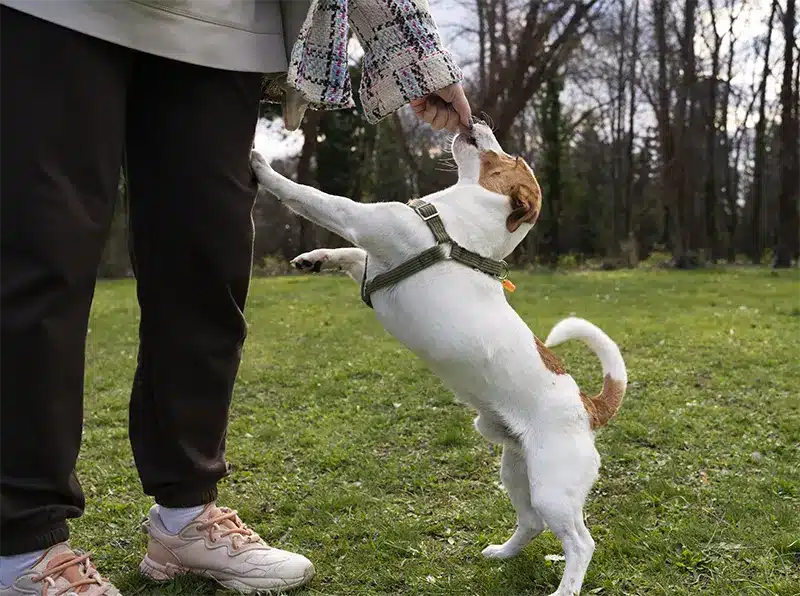
If the owner of the dog owns a home, in most cases, liability for dog bites and dog attacks are covered by a homeowners insurance policy.
Dog bite injury often extends beyond the physical injury and damage.
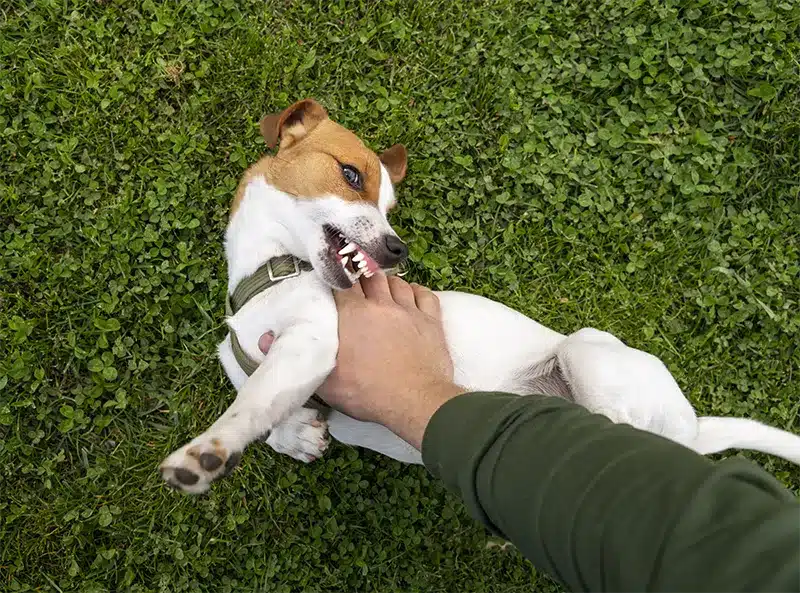
The following damages may be sought in a Dog Bite Lawsuit:
An excellent dog bite lawyer must have extensive trial experience. Your case may never make it to trial, but the other side needs to know that if they choose to fight rather than settle, it will represent a significant investment of time and resources. The other side needs to believe that the risk of facing us in court outweighs the cost of a settlement. With over $1 billion won on behalf of our clients, our reputation as an aggressive, take-no-prisoners law firm has translated into real windfalls for so many clients who truly deserved justice for their hardship.
Dog bite liability in California is set primarily by Civil Code section 3342, which imposes strict liability on the owner of any dog that bites a person on public property or lawfully on private property. Strict liability removes the common-law requirement that the victim show prior viciousness; the owner is responsible from the first bite. The full text of the statute is available through leginfo.legislature.ca.gov.
Several other code sections shape the landscape. Civil Code section 1714 creates the general duty of care that supports negligence claims for non-bite injuries, such as a dog knocking a pedestrian off a bicycle. Code of Civil Procedure section 335.1 sets the two-year personal injury limitations period. Food & Agricultural Code sections 31601 through 31683 empower local hearing officers to declare a dog dangerous or vicious and order containment, sterilization, or euthanasia. Los Angeles County overlays these statewide rules with LA County Code Title 10 Chapter 10.40, which authorizes Animal Control to seize dogs after serious bites and conduct administrative dangerous-dog hearings. The City of Los Angeles applies additional leash and licensing rules under LAMC Chapter VIII.
The strict-liability framework is anchored by the statute, but courts have refined how it interacts with other doctrines. In Priebe v. Nelson (2006) 39 Cal.4th 1112, the California Supreme Court created a kennel-worker exception, holding that a veterinary or boarding employee assumes the risk of being bitten by a dog they are paid to handle. The decision narrowed the class of plaintiffs who can rely on Section 3342 but did not affect ordinary visitors, postal carriers, delivery drivers, or other lawful entrants.
Premises liability cases against landlords are governed by the duty framework set in Rowland v. Christian (1968) 69 Cal.2d 108. A landlord owes a duty of reasonable care to people who enter the property and can be liable for a tenant's dog only when there is actual knowledge of dangerous propensities and a practical ability to remove the animal. Comparative fault, when raised as a defense based on alleged provocation, is analyzed under Li v. Yellow Cab Co. (1975) 13 Cal.3d 804, which rejected the all-or-nothing contributory-negligence rule and adopted pure comparative fault. Even a victim found partially responsible for the encounter retains a recovery reduced by their share. Verify each citation through Justia California Case Law and read the full statute on leginfo.legislature.ca.gov.
Yes. California Civil Code section 3342 imposes strict liability on dog owners when their dog bites a person who is in a public place or lawfully in a private place. The victim does not have to prove the owner knew the dog was dangerous, and prior bite history is not required for recovery. The statute covers bites that puncture the skin, including those that occur during play or by a normally friendly animal. Strict liability does not, however, extend to non-bite injuries such as a person being knocked down, which fall under ordinary negligence.
Adult bite victims have two years from the date of the attack to file a personal injury lawsuit under California Code of Civil Procedure section 335.1. If the victim is a minor at the time of the bite, the deadline is generally tolled until the child turns 18, giving them until their 20th birthday to file. Claims against a public entity, such as a city pound or municipal animal-control failure, must be presented within six months under the Government Claims Act. Missing any of these deadlines typically forfeits the right to recover.
No, the common-law one-bite rule does not apply to bite injuries in California because Civil Code section 3342 replaces it with strict liability. The owner is responsible the first time the dog bites, regardless of the animal's prior conduct or the owner's knowledge. The one-bite analysis can still matter for non-bite injuries, where courts look at whether the owner knew or should have known the dog had dangerous tendencies. It also factors into claims against landlords and other non-owner defendants under negligence theories.
Yes, but the case is brought under ordinary negligence rather than Civil Code section 3342, which only covers actual bites. To win a knockdown claim, the injured person must show the owner failed to use reasonable care in controlling the dog and that this failure caused the fall. Evidence often includes whether the dog was leashed, whether the owner knew the dog jumped on people, and whether local leash laws were violated. Damages for non-bite injuries are recoverable on the same scale as bite cases when negligence is shown.
Under Civil Code section 3342, a prior bite is not required. The statute holds the owner strictly liable from the very first bite when the victim was lawfully on public or private property. Prior conduct only becomes relevant in negligence-based claims, claims for punitive damages, or claims against landlords who knew of vicious propensities. Insurance carriers sometimes argue the absence of a prior bite to push down value, but California law rejects that defense for the bite claim itself. A first-time bite is fully compensable.
A landlord can be liable when they had actual knowledge of a tenant's dog's dangerous propensities and the practical ability to remove the animal, but failed to act. The California Supreme Court set this framework in Uccello v. Laudenslayer and refined it in later decisions. Mere ownership of the property is not enough; the victim must produce evidence the landlord knew the specific dog had attacked or threatened people. Knowledge of a breed alone is generally insufficient. Property-management records, tenant complaints, and prior animal-control reports often supply the proof.
California permits recovery of past and future medical expenses, lost wages and lost earning capacity, pain and suffering, emotional distress, scarring and disfigurement, and the cost of cosmetic and reconstructive surgery. Children frequently receive scar-revision awards that account for procedures performed years after the attack. In limited cases involving an owner's malice, oppression, or fraud, Civil Code section 3294 allows punitive damages. Compensation also includes therapy for post-traumatic stress, which is common in pediatric victims. Property damage, such as torn clothing or broken eyeglasses, is recoverable as well.
Most homeowners and renters policies include personal liability coverage that responds to dog bite claims, typically with limits between $100,000 and $500,000. Some carriers exclude specific breeds or require a separate animal-liability endorsement, particularly for pit bulls, Rottweilers, and other breeds the insurer considers higher risk. If the policy excludes the breed or the owner failed to disclose the dog, the carrier may still be required to defend under reservation of rights. Where coverage is denied, the owner is personally liable, which sometimes requires post-judgment collection efforts.
Pediatric cases often involve higher non-economic damages because facial scarring on a child carries lifelong cosmetic and psychological consequences. Juries are also more willing to award substantial pain and suffering for young victims. Court approval is required for minor compromises under California Probate Code section 3500, and net settlement funds are usually placed in a blocked account or special-needs trust. Future medical costs, including scar revisions performed in adolescence, are typically supported by a treating plastic surgeon's life-care plan. The combination of these factors generally drives settlement values upward.
Civil Code section 3342 carves out an exemption for police and military dogs deployed in the line of duty, provided the agency has adopted a written use-of-force policy for the dog. Bites to suspects during apprehension typically fall under federal civil-rights claims rather than state strict liability. Bystanders bitten by a K-9 who was not properly controlled retain ordinary negligence and Section 1983 claims. Service dogs assisting people with disabilities are generally treated like any other dog under Section 3342, and their owners face the same strict-liability exposure.
Yes. California uses pure comparative fault under Li v. Yellow Cab Co., which means a victim's recovery is reduced by their percentage of fault but never barred. If a jury finds the bite victim 30 percent responsible for provoking the dog, the award is reduced by 30 percent. Provocation, trespass, and assumption of risk are common defenses that shift fault. However, even significantly at-fault victims still recover the remainder, and contributory conduct by young children is usually disregarded because of their inability to appreciate the danger.
Scarring is valued by reference to location, visibility, depth, and the cost of revision surgery. Facial scars consistently receive the highest awards because they cannot be hidden by clothing and affect daily social interactions. Plastic surgeons document the number, length, and severity of scars and project the cost of staged revisions, including dermabrasion, laser resurfacing, and Z-plasty. Photographs taken at intervals during healing are critical evidence. Juries also consider the victim's age, occupation, and whether the scars interfere with facial expression or mobility of joints.
| Severity Tier | Typical Injuries | Settlement Range |
|---|---|---|
| Tier 1 — Minor | Single puncture, no scarring, ER visit only | $8,000 — $25,000 |
| Tier 2 — Moderate | Multiple punctures, sutures, minor scarring | $25,000 — $90,000 |
| Tier 3 — Serious | Lacerations requiring revision, visible scarring, nerve involvement | $90,000 — $350,000 |
| Tier 4 — Severe | Facial disfigurement, multiple surgeries, child victim | $350,000 — $900,000 |
| Tier 5 — Catastrophic | Disabling injury, amputation, fatal attack, wrongful death | $900,000+ |
Past results do not guarantee future outcomes. Each case is unique and case results depend on a variety of factors.
Dog bite cases filed in Los Angeles County are routed by the location of the attack and the residence of the parties. Most personal injury filings are handled at the Stanley Mosk Courthouse at 111 N. Hill Street, which serves as the central civil hub. West-side incidents may be filed at the Santa Monica Courthouse, while attacks in the eastern San Fernando Valley typically route to the Van Nuys Courthouse East. South Bay cases proceed at the Torrance Courthouse, and South-Central LA matters are handled at the Compton Courthouse. Bites that occur in unincorporated county areas, where Los Angeles County Animal Care & Control has jurisdiction, often involve administrative dangerous-dog hearings before a county hearing officer in addition to the civil case. Federal claims, such as Section 1983 actions tied to a police K-9, are filed in the U.S. District Court for the Central District of California.
This page is reviewed by Isaac Radnia, a Burg & Brock partner who has handled premises liability and animal attack matters across Los Angeles County for more than two decades. His casework includes pediatric facial injuries, multi-defendant landlord cases, and claims against homeowners associations whose common areas were the site of repeated incidents. He coordinates with plastic surgeons and pediatric trauma counselors to document the long-term cosmetic and psychological cost of an attack so the case file reflects the full picture at settlement.
Isaac Radnia is admitted in California and verified at Cal Bar #252402. Reviewed by Isaac Radnia, CA Bar #252402. Last updated: 2026-05-08.
Attorney Advertising. The information on this page is for general educational purposes and is not legal advice. Reading this page does not create an attorney-client relationship. Past results do not guarantee future outcomes.
Dog-bite cases in California are governed by Civil Code §3342 strict liability. Below are related premises and personal-injury pages plus city-specific intake.
Talk to one of our attorneys: Cameron Yadidi Brock · Artin Fiterz, Esq. · Greg Diarian · Craig D. Rackohn · Lena G. Karaminassian · Isaac Radnia
Yes. Civil Code section 3342 imposes strict liability on dog owners for any bite that occurs in a public place or while the victim is lawfully on private property. The one-bite rule does not apply. The owner is liable even if the dog had no prior history of aggression.
Settlements depend on injury severity and scarring. Minor bites without scarring settle in the $10,000 to $30,000 range. Cases with surgery, nerve damage, or visible scarring run $50,000 to $250,000. Child victims and facial scarring command higher awards because of the lifetime visibility.
Two years from the date of the bite under Code of Civil Procedure section 335.1. If the victim is a minor, the deadline tolls until their 18th birthday under section 352. Government entity claims require a tort claim notice within six months.
Usually yes. Most homeowner and renter policies include personal liability coverage of $100,000 to $300,000 that covers dog bites by default. Some policies exclude certain breeds. We confirm coverage before negotiating.
Civil Code section 3342(b) exempts police dogs in performance of duty if the agency has a written policy. Service dog bites are not exempt and fall under the strict liability rule. Other working dog bites have specific defenses we evaluate case by case.
Provocation is a defense that can reduce or bar recovery. The provocation must be intentional, not accidental contact like stepping near a sleeping dog or extending a hand. Children under five are typically presumed incapable of provoking a dog.
Section 3342 only covers bites. For knockdown injuries, we file a standard negligence claim. The owner's duty to control their dog is established by Vehicle Code section 27502 (leash laws), local ordinances, and common-law negligence.
Section 3342 makes the owner liable regardless of the dog's history. The owner cannot escape liability by claiming the dog had never bitten before. This is the rule that makes California one of the most plaintiff-friendly states for dog bite cases.
Medical bills (including reconstructive surgery), lost wages, pain and suffering, disfigurement, and emotional distress including PTSD. Disfigurement and scarring are valued separately and increase based on visibility, location, and the victim's age.
Yes. Quarantine is mandatory for rabies observation. It also creates an official report that supports your claim. Cooperate with animal control while protecting your civil claim.
Choose which categories of cookies and tracking technologies you allow on burgbrock.com. Strictly necessary cookies are always on so the site can function.
Required for the site to load, keep you signed in, and remember your preference choice. Always active.
Lets us see which pages people visit so we can improve the site. No personal data is sold.
Allows ad partners to measure the performance of ads you may have seen and show more relevant ads.
Powers extras like chat, embedded video, and remembered form fields. Turning these off may break some features.