Applying is quick and easy, taking only 3–5 minutes

After submitting the form, you’ll be directed to a brief qualification questionnaire

Complete the process by signing an agreement and filling out a short questionnaire

Signing up is free, and you won't owe anything unless we secure compensation for you
We’re assisting Los Angeles residents and their families in securing compensation for evacuation costs and damages caused by the fire, helping them recover and rebuild their lives.
The recent wildfires in Los Angeles were fueled by prolonged drought conditions and Santa Ana winds.
The fire devastated communities in the Palisades and Eaton, burning over 1,000 homes and more than 10,000 acres in just one day, forcing thousands of families to evacuate
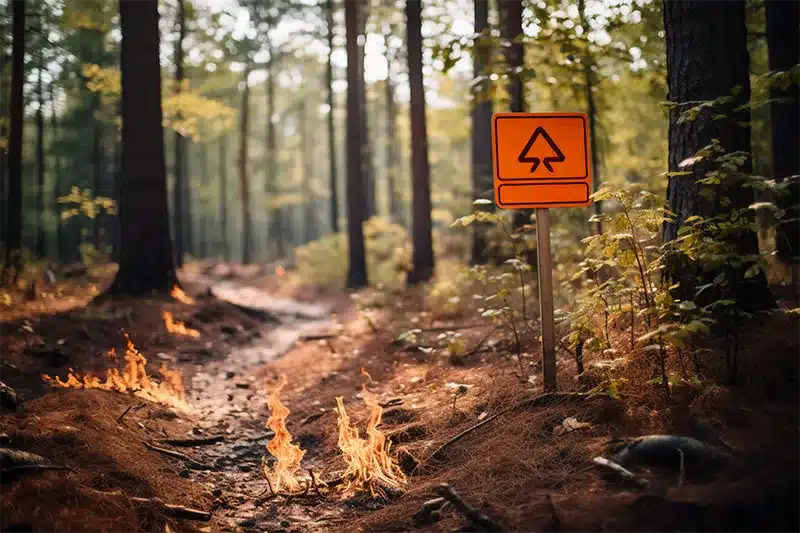

Multiple reports of property loss and fatalities have emerged just one day after the fire ignited in Pacific Palisades, Malibu, and Eaton Canyon near Pasadena.
Many may be eligible for substantial compensation. If you lost a family member, your home, were forced to evacuate, or endured physical or emotional distress, you can register for a compensation claim
We’re assisting Los Angeles residents and businesses in obtaining compensation for damages caused by the wildfires.
If you or a family member experienced injury, wrongful death, or property damage, we’re here to help you get the compensation you deserve.
The claim process is simple and free to sign up

Fire and smoke-damage cases run through premises law and (where the fire is utility-caused) inverse-condemnation theories. Below are related claim types and city pages.
Talk to one of our attorneys: Cameron Yadidi Brock · Artin Fiterz, Esq. · Greg Diarian · Craig D. Rackohn · Lena G. Karaminassian · Isaac Radnia
Fire damage liability rests on Civil Code section 1714's general duty of care and the specific fire-liability provisions of Health & Safety Code section 13007, which makes any person who negligently sets a fire liable for resulting damage. Health & Safety Code section 13008 extends liability to those who allow a fire to escape onto neighboring property. Public Resources Code sections 4291 through 4296 impose defensible-space and ignition-prevention duties on landowners in fire-hazard zones. Statutes are searchable at leginfo.legislature.ca.gov.
Wildfire cases against utilities frequently invoke the doctrine of inverse condemnation under California Constitution Article I section 19, which imposes strict liability on public utilities for property damage caused by their operations. Punitive damages under Civil Code section 3294 are available where the defendant acted with malice, oppression, or fraud. Personal injury claims must be filed within two years under Code of Civil Procedure section 335.1. Property-damage and inverse-condemnation claims have a three-year limitations period under section 338.
Health & Safety Code section 13007 has been applied in many California decisions to support liability for negligent fire ignition, and Donchin v. Guerrero (1995) 34 Cal.App.4th 1832 addressed adequacy-of-warning theories applicable to fire risks on property. Inverse condemnation against public utilities has been confirmed in multiple appellate decisions, including the line of cases addressing wildfire liability against PG&E, SCE, and SDG&E. The doctrine imposes strict liability for property damage caused by the utility's operations even without negligence.
Comparative fault under Li v. Yellow Cab Co. (1975) 13 Cal.3d 804 applies to fire cases the same as any other tort. Damages doctrines from Howell v. Hamilton Meats & Provisions, Inc. (2011) 52 Cal.4th 541 and Pebley v. Santa Clara Organics, LLC (2018) 22 Cal.App.5th 1266 apply with full force to personal injury claims arising from fires. Punitive damages under Civil Code section 3294 remain available against private defendants on clear and convincing evidence of malice, oppression, or fraud. Verify each citation at Justia California Case Law.
Yes. California public utilities are subject to inverse condemnation under Article I section 19 of the California Constitution, which imposes strict liability for property damage caused by their operations regardless of fault. Negligence claims also remain available, including for failure to maintain vegetation around power lines under General Order 95, defective equipment, and decisions to leave high-fire-risk lines energized during red-flag conditions. The combination of strict-liability inverse condemnation and negligence claims has driven multi-billion-dollar settlements in recent years.
Personal injury claims have two years under California Code of Civil Procedure section 335.1. Property damage and inverse-condemnation claims have three years under section 338. Public-entity defendants other than utilities require a six-month government claim under Government Code section 911.2 followed by suit within six months of rejection. Insurance subrogation claims have their own limitations periods. Latent injury or damage may benefit from the discovery rule, but reliance on discovery extensions is risky and prompt counsel review is essential.
Recoverable damages include the diminution in property value or cost of repair, the value of personal property lost in the fire, additional living expenses during displacement, emotional distress, loss of trees and landscaping (often calculated separately from the structure), evacuation expenses, and damage to non-residential structures such as outbuildings and fencing. Inverse condemnation recoveries also include attorneys' fees and costs for the property-damage portion of the case. Personal injury and wrongful death components are recovered separately under standard tort principles.
Yes. California recognizes negligent infliction of emotional distress in fire cases through both bystander and direct-victim theories. Bystander recovery under Thing v. La Chusa requires presence at the scene, contemporaneous awareness, and close family relationship to a victim. Direct-victim claims are available where the plaintiff sustained personal injury or where the defendant owed an independent duty to the plaintiff. Property-damage emotional distress claims are sometimes pursued under stigma-of-property theories, with mixed results. Cases involving the destruction of family homes routinely include substantial emotional-distress damages.
Inverse condemnation is a constitutional remedy under California Article I section 19 that imposes strict liability on public utilities for property damage caused by their operations. The plaintiff does not have to prove negligence; the mere fact that the utility's equipment caused the fire establishes liability for property damage, plus attorneys' fees and costs under Code of Civil Procedure section 1036. The doctrine has driven the recent multi-billion-dollar wildfire settlements and is the most powerful tool available to property-owner plaintiffs in utility-caused fire cases.
Yes. Health & Safety Code section 13007 makes any person liable for damage from a fire they negligently set, and section 13008 extends liability for the spread of a fire that escapes through negligent failure to control. Common cases involve burn piles, debris fires, fireworks on private property, electrical malfunctions in neighboring structures, and arson. The plaintiff must prove negligence in the ignition or in the failure to contain. Photos, fire-investigator reports, and prior-violation citations supply the proof.
Yes, when the plaintiff shows malice, oppression, or fraud by clear and convincing evidence under Civil Code section 3294. Patterns supporting punitives in wildfire cases include knowing failure to maintain vegetation under General Order 95, failure to deenergize lines during red-flag warnings despite known risk, falsified maintenance records, and concealment of equipment failures. Several recent wildfire settlements included punitive components, and the threat of punitives drives much of the settlement value in cases involving systemic utility failures over years.
Insurance bad-faith claims are available against carriers that wrongfully deny or unreasonably delay payment of property and personal-property claims. California Insurance Code section 790.03 lists unfair claim practices that support bad-faith liability. Common bad-faith patterns include lowball estimates, delayed adjuster contact, refusal to pay for covered additional living expenses, and unreasonable demands for documentation. Bad-faith damages can include the policy benefits, emotional distress, attorneys' fees under Brandt v. Superior Court, and punitive damages under Civil Code section 3294.
Yes. Renters can recover the value of their personal property destroyed in the fire, additional living expenses during displacement, emotional distress, and any personal injury and wrongful death damages. Renter inverse-condemnation claims for personal property damage against utilities are well-established. Renter homeowners' claims against landlords for inadequate fire prevention, blocked egress, or non-functional smoke detectors are pursued separately. California Civil Code section 1942 obligates landlords to maintain rental property in habitable condition, which includes basic fire safety.
Major California wildfires generate hundreds or thousands of plaintiff claims, which are often consolidated through the Judicial Council Coordinated Proceeding (JCCP) procedure. JCCP coordination centralizes pretrial proceedings before a single judge while preserving individual case characteristics. Bellwether trials are used to value the broader inventory and drive settlement of remaining cases. Settlement frameworks often include a court-supervised claims administration process that values each plaintiff's case based on injuries, property damage, and personal-property losses.
Most wildfire cases settle through coordinated mediation, with bellwether trials selectively used to drive settlement values. Major utility-caused wildfire cases have settled for billions in aggregate, with individual recoveries varying widely based on the property destroyed, personal-property losses, and any personal-injury or wrongful-death components. Cases involving smaller fires, individual landowner ignition, or landlord-liability theories sometimes proceed to individual trial. The typical Los Angeles County fire case is set for trial 18 to 30 months after filing.
Photograph everything before any debris removal. Preserve receipts and serial numbers for high-value items. Build a complete personal-property inventory with photos, receipts, and approximate purchase dates. Save all rebuild estimates, contractor bids, and insurance correspondence. For displaced families, log every additional living expense including hotel stays, restaurant meals, transportation, and storage fees. Pre-fire photographs of the property, often available from real-estate listings, social media, and family photos, help establish the pre-loss condition for the property-damage claim.
| Severity Tier | Typical Injuries | Settlement Range |
|---|---|---|
| Tier 1 — Limited | Smoke damage, partial repair, no displacement | $15,000 — $75,000 |
| Tier 2 — Moderate | Significant repair, brief displacement, modest personal-property loss | $75,000 — $400,000 |
| Tier 3 — Serious | Total structure loss, full personal-property loss, long displacement | $400,000 — $2,000,000 |
| Tier 4 — Severe | Multi-property loss, business interruption, emotional distress | $2,000,000 — $7,500,000 |
| Tier 5 — Catastrophic | Wrongful death, mass-action allocation, punitive components | $7,500,000+ |
Past results do not guarantee future outcomes. Each case is unique and case results depend on a variety of factors.
Cases filed in Los Angeles County are routed by the location of the incident and the residence of the parties. Most personal injury filings are handled at the Stanley Mosk Courthouse at 111 N. Hill Street, which serves as the central civil hub. West-side incidents may be filed at the Santa Monica Courthouse, while events in the eastern San Fernando Valley typically route to the Van Nuys Courthouse East. South Bay matters proceed at the Torrance Courthouse, and South-Central LA cases are handled at the Compton Courthouse. Long Beach and the surrounding ports route to the Governor George Deukmejian Courthouse. Federal claims, including those involving federal preemption or diversity jurisdiction, are filed in the U.S. District Court for the Central District of California.
This page is reviewed by Isaac Radnia, a Burg & Brock partner whose practice includes fire damage, wildfire, and burn injury cases throughout California. Isaac handles cases involving utility-caused wildfires, residential structure fires, e-cigarette and lithium-battery fires, and insurance bad-faith disputes, and he coordinates with fire-investigation experts, public adjusters, life-care planners, and forensic accountants to document the full property, personal-property, and personal-injury picture in fire cases.
Isaac Radnia is admitted in California and verified at Cal Bar #252402. Reviewed by Isaac Radnia, CA Bar #252402. Last updated: 2026-05-08.
Attorney Advertising. The information on this page is for general educational purposes and is not legal advice. Reading this page does not create an attorney-client relationship. Past results do not guarantee future outcomes.
Liability often falls on utility companies (PG&E, SCE, SDG&E) under California's inverse condemnation doctrine when their equipment started the fire. Other defendants include neighboring landowners who failed to clear brush, contractors who used spark-producing equipment in fire-risk areas, and arsonists.
Inverse condemnation under California Constitution Article I section 19 makes utilities strictly liable for fire damage caused by their equipment, regardless of negligence. Plaintiffs do not need to prove the utility was careless. This is the basis for most of the major utility-caused wildfire settlements.
Recovery covers the diminished value of your property, cost of repair or rebuild, lost rental income, evacuation expenses, personal property loss, lost wages, and emotional distress. Major utility-caused wildfires (Camp Fire, Thomas Fire) produced settlements in the high five and six figures per household, with catastrophic losses reaching seven figures.
Your insurer becomes subrogated to your claim, meaning they pursue the utility for what they paid. You can still recover the uncovered amount: deductibles, depreciation, contents undervaluation, additional living expenses, emotional distress, and uninsured losses. These often add significant value.
Generally three years from the date of fire for property damage under Code of Civil Procedure section 338(b). Personal injury from smoke inhalation or burns is two years. Class actions and mass tort proceedings sometimes have shorter notice deadlines, so act promptly.
Yes. Smoke damage, ash, and air quality losses are recoverable. Recovery covers cleaning, replacement of damaged contents, and any health effects. Documentation through environmental testing reports strengthens the claim.
Evacuation costs (hotel, meals, transportation), missed work, and emotional distress from the evacuation are recoverable in some cases, particularly mass-evacuation events tied to utility negligence. Recovery is harder than property-damage cases and depends on the specific fire.
Both. Most major wildfires have multiple class actions and master tort proceedings, but each claimant's damages are individual. Burg & Brock handles wildfire cases as individual claims within or outside the consolidated proceedings.
Photos and video of the damage before cleanup, inventory of every item lost (with receipts where possible), evacuation expense receipts, medical records for smoke inhalation or burns, and any pre-fire property valuation. Save everything.
No. Contingency only. No fee unless we recover. Case costs come out of the settlement. Free consultation.
Choose which categories of cookies and tracking technologies you allow on burgbrock.com. Strictly necessary cookies are always on so the site can function.
Required for the site to load, keep you signed in, and remember your preference choice. Always active.
Lets us see which pages people visit so we can improve the site. No personal data is sold.
Allows ad partners to measure the performance of ads you may have seen and show more relevant ads.
Powers extras like chat, embedded video, and remembered form fields. Turning these off may break some features.