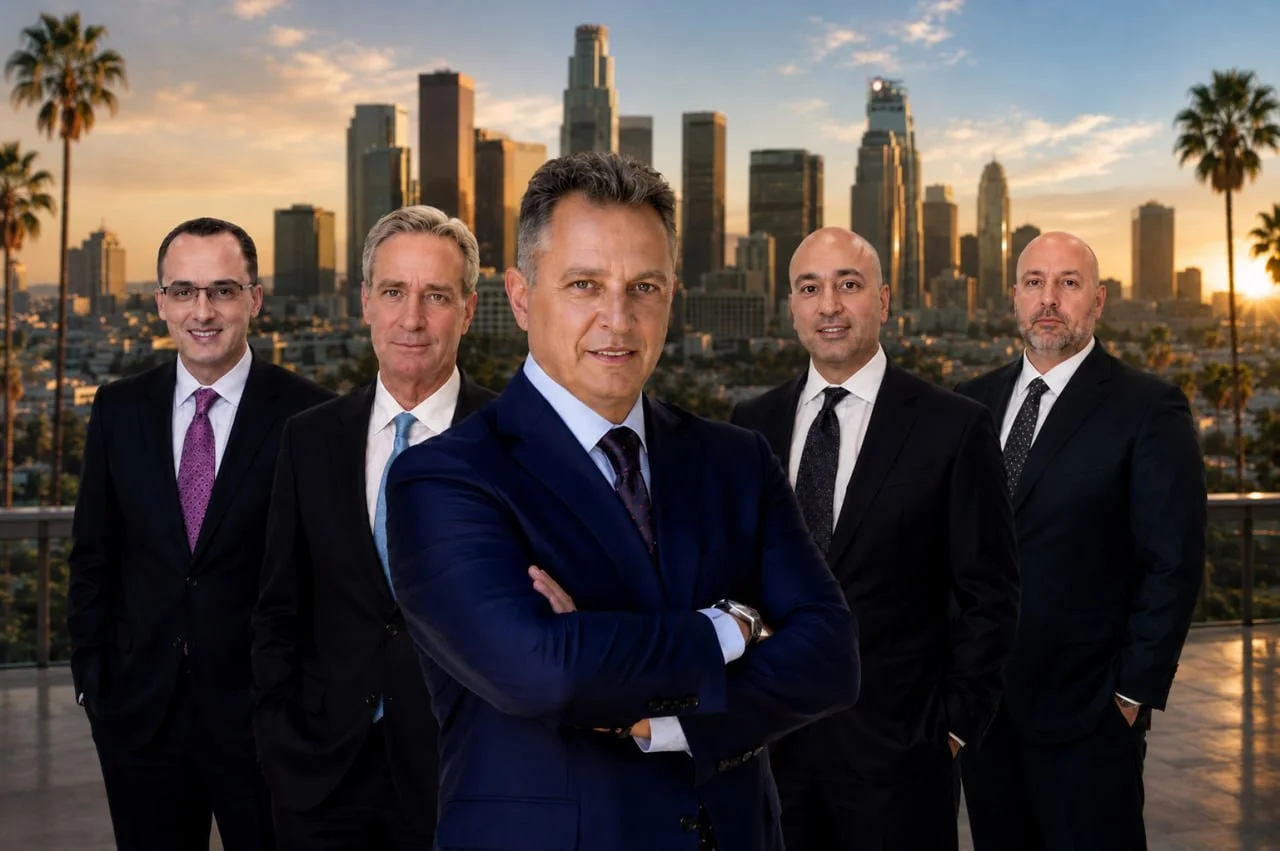
Answers to the 43 questions Burg & Brock attorneys hear most often from California injury victims — covering statute of limitations, fees, evidence, damages, and what to expect from your case.
Free Case EvaluationA serious injury changes the calendar. Within forty-eight hours you have insurance adjusters calling, surveillance footage cycling out at nearby businesses, medical bills stacking up, and a two-year clock running under California Code of Civil Procedure §335.1. The questions on this page are the ones our attorneys hear most often from clients in those first weeks — the ones we wish every California injury victim asked before they spoke to anyone in an insurance lanyard.
The answers are organized into five categories: when to act, what it costs to hire a lawyer, what happens during the case, how settlements are calculated, and how California treats specific types of injury claims (motorcycle, pedestrian, premises, wrongful death, and others). Each answer cites the California statute or appellate decision that controls, so you can verify what you are reading.
If a question is not covered here, call Burg & Brock at (888) 528-8595. The consultation is free, there is no fee unless we recover, and you can reach an attorney any time, day or night.
California's deadlines are unforgiving — and they shift depending on who's being sued, when the injury surfaced, and whether the defendant is a public entity. The answers below cover the windows you need to know before they close.
Reach out as soon as you can — even before you talk to an insurance adjuster. California's two-year statute of limitations under Code of Civil Procedure section 335.1 starts the day of injury, but evidence disappears far faster than that. Skid marks fade, witnesses move, surveillance footage gets overwritten on a 30- to 90-day cycle. Calling Burg & Brock at (888) 528-8595 within the first week lets us photograph the scene, send preservation letters to nearby businesses, and lock down the police report before anything is lost.
Most straightforward auto cases settle within nine to fifteen months once medical treatment ends. Cases with disputed liability, severe injuries, or commercial defendants commonly run eighteen to thirty months. A case that goes to trial in Los Angeles Superior Court can take three years or more from filing to verdict because of the court's backlog under Code of Civil Procedure section 583.310 (five-year dismissal rule). The single biggest variable is when you reach maximum medical improvement — settlement value cannot be calculated until then.
Two years from the date of death under Code of Civil Procedure section 335.1 — same window as a standard personal injury claim. There are exceptions: claims against public entities require a Government Code section 911.2 claim filed within six months of accrual. Medical malpractice wrongful death falls under section 340.5 (one year from discovery, three years from injury). Missing the deadline is fatal to the case. If you suspect negligence caused a loved one's death, calling Burg & Brock at (888) 528-8595 while the timeline is fresh keeps every option open.
Two years from the date of injury under Code of Civil Procedure section 335.1 for most personal injury and wrongful death cases. Property damage claims get three years under section 338. Medical malpractice runs one year from discovery or three years from injury, whichever is sooner, under section 340.5. Claims against public entities require a tort claim filed with the agency within six months under Government Code section 911.2 — miss the six-month tort claim and the case is over before it starts.
Yes. Minors have until two years after their eighteenth birthday under Code of Civil Procedure section 352. The discovery rule tolls the clock until you reasonably should have known of the injury and its cause — common in toxic exposure and medical cases. Defendants who leave the state can have the time of absence excluded under section 351. Government claim filings start a new ninety-day window once denied. Each exception is fact-specific and easy to misapply, which is why early consultation matters.
Government Code section 911.2 requires a written tort claim filed within six months of accrual for personal injury and property damage against a public entity. The agency has 45 days to act — denial (or non-action treated as denial) starts a six-month window to file suit under section 945.6. Late claims can sometimes be excused under section 911.4 but only on narrow grounds. Public-entity cases are unforgiving; do not assume the standard two-year window applies if any city, transit agency, or state vehicle was involved.
Burg & Brock handles personal injury cases on contingency. No retainer, no hourly bill, no out-of-pocket cost up front. These answers explain the math, the written agreement California law requires, and how case expenses are tracked separately from attorney fees.
Nothing. Every case evaluation at our Encino office runs on a contingency model — you pay no consultation fee, no hourly fee, and no upfront retainer. If we accept your case and recover money on your behalf, our fee comes out of the settlement or verdict. If there is no recovery, you owe us no attorney fee. That structure is governed by California Business and Professions Code section 6147, which requires written contingency agreements that spell out the percentage in plain English before any work begins.
California minimums until December 31, 2024 were 15/30/5 — fifteen thousand per person, thirty thousand per accident, five thousand property damage. As of January 1, 2025 the minimums under Senate Bill 1107 jumped to 30/60/15. By January 1, 2035 the minimums step up to 50/100/25. The 30/60/15 floor still leaves serious-injury victims under-covered, which is why uninsured/underinsured motorist coverage on your own policy is so important. We always check whether stacking applies across multiple household policies.
UM/UIM coverage pays for injuries caused by a driver who has no insurance (UM) or whose insurance is not enough (UIM). Insurance Code sections 11580.2 and 11580.26 require carriers to offer it; you can reject it only in writing. The Insurance Information Institute estimated 16.6% of California drivers were uninsured in 2022. UM/UIM also covers hit-and-run drivers in most cases. Your premium for stacking your liability limits in UM/UIM is usually under $200 per year — the cheapest meaningful insurance most drivers can buy.
You pay no fee unless we recover money on your case. The standard contingency in California PI matters runs 33⅓% of the gross settlement before suit, increasing to 40% once we file a lawsuit and to 45% if the case goes through trial or appeal. Costs (filing fees, deposition transcripts, expert witnesses, medical records) are advanced by us and reimbursed from the recovery. Business and Professions Code section 6147 requires the fee agreement in writing with all percentages disclosed before any work begins.
Yes. Attorney fees compensate the firm for legal work; costs cover out-of-pocket case expenses — court filing fees, deposition stenographer fees, expert witness retainers, medical-record copy charges, accident reconstruction, mediation fees, exhibit preparation. California fee agreements separate the two so you see exactly where money goes. We advance costs as the case progresses and recoup them out of the gross recovery before the fee percentage is calculated. Cost recovery is also disclosed in the closing statement to the dollar.
Many of our clients cannot pay medical bills out of pocket while a case is pending. Treating providers will often accept a medical lien — they treat now, get paid from the settlement, and you sign a lien letter making that promise enforceable under Civil Code section 3045.1 (hospitals) or contract for non-hospital providers. Medi-Cal, Medicare, and private health insurance also have subrogation or reimbursement rights that come out of recovery. We coordinate with providers and insurers so treatment never stops over money.
What happens between the day you call and the day a check clears. Evidence preservation, recorded statements, what to do at the scene, demand letters, and the documents that build the file.
Bring the police or incident report if one was filed, photos of the scene and your injuries, contact info for any witnesses, your insurance declarations page, the other driver's insurance information if applicable, all medical records and bills you have received so far, and any correspondence from insurance adjusters. If you do not have something, do not panic — we can request records on your behalf once you sign a limited authorization. Even partial documentation is enough for a first conversation.
Move to safety, call 911, and request a police report even if injuries seem minor. Photograph all vehicles, license plates, traffic signals, road conditions, and any visible injuries. Exchange names, phone numbers, driver's license numbers, insurance carriers, and policy numbers with every driver involved. Get contact details from witnesses before they leave. Do not apologize, do not speculate about fault, and do not refuse medical attention. Adrenaline routinely masks soft-tissue injuries that show up days later.
No — not without speaking to a lawyer first. Adjusters are trained to ask questions whose answers compress your damages. "Are you feeling better today?" sounds friendly; in transcript form it becomes evidence that you reached maximum medical improvement on day three. California law does not require you to provide a recorded statement to the other party's carrier. You are obligated to cooperate with your own carrier under most policies — but even there, an attorney can sit with you on the call and shut down questions that exceed the cooperation duty.
Your own uninsured motorist (UM) and underinsured motorist (UIM) coverage steps in. Insurance Code sections 11580.2 and 11580.26 govern UM/UIM in California — your carrier must offer it, and roughly 16.6% of California drivers are uninsured per the Insurance Information Institute. For hit-and-run cases, UM still applies if you have physical contact with the fleeing vehicle (or, with some carriers, an independent witness). We file the UM claim, document the elements, and arbitrate if your own carrier lowballs you.
ELD data is overwritten on a rolling basis — federal rule 49 CFR 395.8(k) requires retention for only six months. Onboard event-data recorders capture the seconds before impact but are routinely wiped during repair. Dashcam footage is typically retained 30-90 days. Driver qualification files and post-accident drug test results follow short retention windows. We send a spoliation letter the day we are retained, demanding preservation of these records and putting the carrier on notice that destruction of evidence will trigger a jury instruction under Cedars-Sinai Medical Center v. Superior Court (1998) 18 Cal.4th 1.
A demand letter is the formal package we send to the at-fault carrier once you have completed treatment or reached maximum medical improvement. It includes a liability summary, medical records and bills, lost-wage documentation, photos, witness statements, and a settlement demand. Adjusters use this package to set reserves and authority. Most cases see meaningful negotiation begin within 30-60 days of demand. If the response is unreasonable, we file suit. The demand letter is the most important non-trial document we draft.
Yes, and they do every day. Adjusters deny based on disputed liability, alleged pre-existing conditions, gaps in treatment, claimed material misrepresentation, or policy exclusions. A denial is not the end of the case — it is the start of the litigation phase. We respond with a demand for production of the claim file, depose the adjuster where bad faith is suspected under Insurance Code section 790.03, and bring a Brandt-fee claim where the carrier's conduct exceeds normal denial pressure. Bad-faith exposure is what moves entrenched carriers.
What a California injury case is worth depends on liability, the medical record, lost income, future treatment costs, and how the recovery is structured at the end. The questions below cover the math behind offers, verdicts, and the comparative-fault rules that shape both.
Probably yes. California follows a pure comparative negligence rule under Li v. Yellow Cab Co. (1975) 13 Cal.3d 804. Your recovery is reduced by your percentage of fault, but you can still recover even if you were 99% responsible. A driver judged 30% at fault for a $200,000 in damages still collects $140,000. Insurance carriers often inflate your share of blame to cut their payout — that is one of the central battles a Burg & Brock attorney fights on your behalf.
Two buckets: economic damages (medical bills, lost wages, future care, property damage) and non-economic damages (pain, suffering, loss of enjoyment, scarring). Economic damages are added up from documented losses. Non-economic damages are negotiated using factors like injury severity, treatment length, permanent impairment, and the credibility of your testimony. California has no cap on non-economic damages in standard auto cases — only medical malpractice cases are capped under MICRA. Punitive damages are available where the defendant acted with malice or oppression under Civil Code section 3294.
Recovery depends on injuries, available insurance, and liability strength. Federal minimum coverage is $750,000 for general freight and $5,000,000 for hazardous materials. Most regional carriers carry $1-5 million primary plus excess layers. Cases involving spinal cord injury, traumatic brain injury, or wrongful death routinely settle or verdict in the seven-figure range when liability is clear. Burg & Brock has secured multi-million-dollar resolutions in trucking matters since 1996. See our truck accident lawyer hub for case examples.
Two categories of recovery: damages to the heirs (loss of financial support, loss of household services, loss of companionship, loss of moral support, funeral and burial expenses) and damages to the estate via a survival action (the decedent's pre-death medical bills, lost earnings between injury and death, and pain and suffering — recoverable since SB 447 amended Code of Civil Procedure section 377.34 effective January 1, 2022, for actions filed before January 1, 2026). Punitive damages are recoverable in the survival action where the conduct meets Civil Code section 3294.
Yes — Code of Civil Procedure section 377.30 lets the personal representative or successor in interest pursue the decedent's own causes of action that survived the death. Survival damages cover what the decedent could have recovered: medical bills, lost income, and pre-death pain and suffering. Wrongful death damages compensate the heirs for their loss. Both claims usually run together in one lawsuit because the underlying negligence is identical. Coordinating who controls each claim early is critical when family relationships are complicated.
TBI valuation rests on neuropsychological testing, neuroimaging (MRI, DTI, fMRI), life-care planning, and vocational expert work. Mild TBI (concussion) cases are valued lower but rarely settle quickly because symptoms can persist for months. Moderate-to-severe TBI cases routinely run seven to eight figures because of decades-long care needs and reduced earning capacity. Documentation is everything — we coordinate with neurologists, neuropsychologists, and life-care planners to build the medical and economic record. See our brain and spinal cord injury page for details.
A concussion is a mild traumatic brain injury — temporary disruption of brain function from a blow or jolt. Glasgow Coma Scale 13-15 with brief or no loss of consciousness. Moderate TBI is GCS 9-12 with loss of consciousness from minutes to hours. Severe TBI is GCS 3-8 with extended unconsciousness. Even mild TBI can leave permanent symptoms — post-concussion syndrome, sleep disruption, mood changes, cognitive slowing. The label drives early triage; the long-term picture drives case value.
Spinal cord injuries above T6 (high paraplegia and quadriplegia) require lifetime attendant care, accessible housing modifications, durable medical equipment replacement on five-to-ten-year cycles, and ongoing therapy. Life-care plans for catastrophic SCI commonly project $5-15 million in present-value future medical costs alone. We retain board-certified life-care planners (CLCP credential) and economists to discount those costs to present value under the appropriate California discount rate. Settlement structures often include Medicare Set-Aside trusts to protect future eligibility.
Almost never. First offers from at-fault carriers are routinely 20-50% of fair value — adjusters expect counter-offers and have authority above the opening number. Accepting too early means signing a release that bars any future claim, including for complications that surface months later. Once you sign, you cannot reopen the case for a worsening of the same injury. We negotiate from documented evidence, not adjuster pressure, and we walk away from offers that fail to cover future care. Our floor is what the medicine and the wage loss actually require.
A structured settlement converts part or all of your recovery into a tax-free annuity that pays out over time. Internal Revenue Code section 104(a)(2) makes physical-injury settlement income tax-free, and section 130 extends that treatment to the structured-payment income stream. Structures fit minors, catastrophically injured plaintiffs, and clients who want guaranteed long-term income. Lump-sum is simpler but requires disciplined investment. We work with structured-settlement consultants to map options once we know the recovery range.
Your settlement pays liens before you see net funds. Health insurance subrogation, Medi-Cal/Medicare reimbursement, hospital liens under Civil Code section 3045.1, and attorney's fees come off the top. We negotiate every lien — Medi-Cal can be cut under the Ahlborn formula, ERISA plans under specific federal rules, and hospital liens under the common-fund doctrine. Lien negotiation often adds 10-20% to your net recovery. The closing statement breaks down every dollar so there are no surprises at funding.
Different injuries follow different rules. California treats motorcycles, pedestrians, bicyclists, commercial trucks, premises cases, and wrongful death under separate frameworks. The questions below cover the litigation patterns that come up most often in each.
Yes, and passengers usually have the strongest cases. As a passenger you have no comparative fault for the accident itself unless you grabbed the wheel or distracted the driver. You can pursue claims against any at-fault driver — including the driver of the car you were riding in. If a friend or family member was driving, the claim runs against their auto liability policy, not against them personally. Awkward conversations are a fair concern; the recovery is what your medical bills and future care will require.
Federal Motor Carrier Safety Regulations (FMCSR) — 49 CFR Parts 350-399 — govern interstate trucking and create independent grounds for liability. Hours-of-service violations, electronic logging device (ELD) data, driver qualification files, drug and alcohol testing records, and maintenance logs all become discoverable evidence. The defendants usually include the driver, the motor carrier, the broker, the shipper, and sometimes the cargo loader under negligent entrustment or negligent maintenance theories. Insurance limits start at $750,000 federal minimum and routinely run into the millions, which is why trucking carriers fight harder than auto carriers.
Yes. Last-mile delivery (Amazon DSP, FedEx Ground contractors, UPS) and rideshare (Uber, Lyft) drivers operate under contractual frameworks that sometimes shift liability to the platform and sometimes leave it with the driver alone. California Public Utilities Code section 5440 and AB 5 / Proposition 22 affect classification. For rideshare, there is mandatory $1 million third-party liability coverage under Public Utilities Code section 5433 once the driver has accepted a ride. We trace the liability chain and identify every available policy.
Stereotypes work against riders, and insurance adjusters know it. Anti-rider bias shows up in claim valuation and in jury pools. The legal standard is identical — Vehicle Code section 21200 puts motorcyclists under the same rules of the road as drivers, and lane splitting is legal under Vehicle Code section 21658.1 since 2017. We counter bias with helmet evidence, gear photos, riding history, and CHP MAID (Motorcycle Awareness and Intelligent Driving) data showing how often other drivers fail to see riders. The case turns on the same negligence elements as any auto case.
California has a universal helmet law under Vehicle Code section 27803 — every rider must wear a DOT-compliant helmet. Riding without one is an infraction but does not automatically bar recovery. The defense can argue helmet non-use as comparative negligence for head injuries (the "helmet defense"), but only for damages causally tied to head trauma. Body injuries, fractures, and road rash are unaffected. California courts apply this carefully — see Krause v. Apodaca (1965) 234 Cal.App.2d 449 and later cases on causation and comparative fault.
The turning driver almost always — Vehicle Code section 21801 requires a left-turning driver to yield to oncoming traffic close enough to constitute a hazard. Left-turn-into-motorcycle is one of the most common collision patterns and one of the easiest for plaintiffs on liability. The defense usually pivots to speed ("the rider was going too fast to see") or visibility ("sun glare"). We rebuild speed from skid marks, accident reconstruction, and EDR data when available, and we counter visibility defenses with sight-line photographs taken at the same time of day.
Vehicle Code section 21950(a) requires drivers to yield to pedestrians in marked or unmarked crosswalks at intersections. Pedestrians outside crosswalks must yield to vehicles under section 21954, but a driver still has a duty of due care under section 21950(c). Comparative fault often comes into play — a pedestrian crossing mid-block at night in dark clothing may share blame, but the driver's duty does not vanish. We work pedestrian cases hard because the injuries are routinely catastrophic and the liability law tilts in the pedestrian's favor.
Yes — Vehicle Code section 21200 grants bicyclists the same rights and duties as drivers. They can use most travel lanes, must obey traffic signals, and can be liable for negligent riding. Cyclists also get specific protections: Vehicle Code section 21760 (the Three Feet for Safety Act) requires drivers to pass with at least three feet of clearance. Local ordinances in Los Angeles, Pasadena, and Beverly Hills add bike-lane and dooring rules. Our bicycle accident cases use these specific statutes to pin liability where it belongs.
Yes. Private parking lots are not exempt from negligence law — drivers owe a duty of reasonable care wherever they operate a vehicle. The property owner may also bear liability under premises liability theory if poor lighting, blind corners, or absent signage contributed to the collision. Many parking-lot collisions are captured on surveillance video; we send preservation letters within 48 hours of being retained because most retailers overwrite footage in 14 to 30 days. Insurance adjusters sometimes argue parking-lot speeds reduce damages — that argument fails when the injuries are documented.
Code of Civil Procedure section 377.60 lists the statutory heirs in priority order: the surviving spouse or domestic partner, children, and grandchildren of deceased children. If none exist, parties entitled to the decedent's property by intestate succession may sue, plus financial dependents. Putative spouses and stepchildren can qualify under specific conditions. Only one wrongful death lawsuit is permitted per decedent — all eligible heirs must join or coordinate, and a separate survival action under section 377.30 may proceed alongside it for the decedent's pre-death damages.
Four elements under Ortega v. Kmart Corp. (2001) 26 Cal.4th 1200: (1) the property owner owned, leased, occupied, or controlled the premises; (2) the owner was negligent in the use or maintenance; (3) you were harmed; (4) the negligence was a substantial factor. The hardest element is notice — actual notice (the owner knew about the hazard) or constructive notice (the hazard existed long enough that a reasonable inspection would have caught it). Sweep-log records, surveillance video, and prior incident reports build the notice case.
Yes, under specific circumstances. A landlord owes a duty of reasonable care to tenants and visitors for common areas the landlord controls (lobbies, stairwells, parking lots, walkways). Liability inside a unit depends on who controls what — Civil Code section 1714 imposes a general duty of care, and the test from Rowland v. Christian (1968) 69 Cal.2d 108 governs foreseeability. Landlords are also liable for known dangerous conditions they failed to disclose or repair under Civil Code section 1941. Document the hazard, report it in writing, and call us before the trail goes cold.
Not automatically. A warning sign is one factor in the open-and-obvious analysis, but it does not eliminate the property owner's duty to maintain reasonably safe premises. If the owner created the hazard, the warning may not satisfy the duty of care under Krongos v. Pacific Gas & Electric Co. (1992) 7 Cal.App.4th 387. Comparative fault may reduce your recovery if you ignored a clearly placed sign — but a warning sign is not a get-out-of-liability-free card, especially where the hazard could have been cleaned up instead.
These are the bands Burg & Brock attorneys see across the full California docket. Every case is different; the range below is descriptive, not a quote.
| Case Type | Typical Range |
|---|---|
| Auto accident | $25,000 – $5,000,000+ |
| Commercial truck | $100,000 – $10,000,000+ |
| Wrongful death | $250,000 – $15,000,000+ |
| Slip and fall | $15,000 – $1,000,000+ |
| Premises liability | $30,000 – $3,000,000+ |
Prior results do not guarantee a similar outcome. Each case is evaluated on its own facts.
If your question isn't answered above, the fastest way to get a real answer is to call. Same-day appointments are routine. No fee unless we recover.
Free Consultation Call (888) 528-8595
Choose which categories of cookies and tracking technologies you allow on burgbrock.com. Strictly necessary cookies are always on so the site can function.
Required for the site to load, keep you signed in, and remember your preference choice. Always active.
Lets us see which pages people visit so we can improve the site. No personal data is sold.
Allows ad partners to measure the performance of ads you may have seen and show more relevant ads.
Powers extras like chat, embedded video, and remembered form fields. Turning these off may break some features.