ONE OF THE STRONGEST LEGAL TEAMS IN CALIFORNIA
We'll FIGHT all the way to the end! And most importantly…
We deliver Results
Ridesharing services like Uber have made urban life a great deal easier, and that’s especially true here in Southern California, where the distances between any two points are often enormous, where public transportation is spotty at best, and where few can afford to take taxis on a regular basis. Of course, there’s nothing about Uber vehicles that automatically prevent collisions, and injury accidents involving Uber drivers do occur. Fortunately, Burg & Brock is here to help Southern California auto collision victims obtain the full compensation they deserve. With our Uber Accident Lawyers in California, we have been helping injured victims get the justice and compensation they deserve after being injured in an Uber or Lyft accident.

Not really. The big difference has to do with the amount of insurance carried by drivers. An ordinary motorist might carry as little as the legally required 15/30 standard. ($15,000 per victim and $30,000 per accident.) Assuming the at-fault driver has no other significant assets, this can severely limit the amount of compensation a victim can receive. Uber, however, is a multi-billion dollar company with enormous assets to protect, so it makes sure that each of its drivers is carrying $1 million worth of coverage while they are on the job.
What this means is that victims in four categories may be able to obtain a much higher level of compensation, depending on the circumstances and the nature of their injuries. This breaks down as follows:
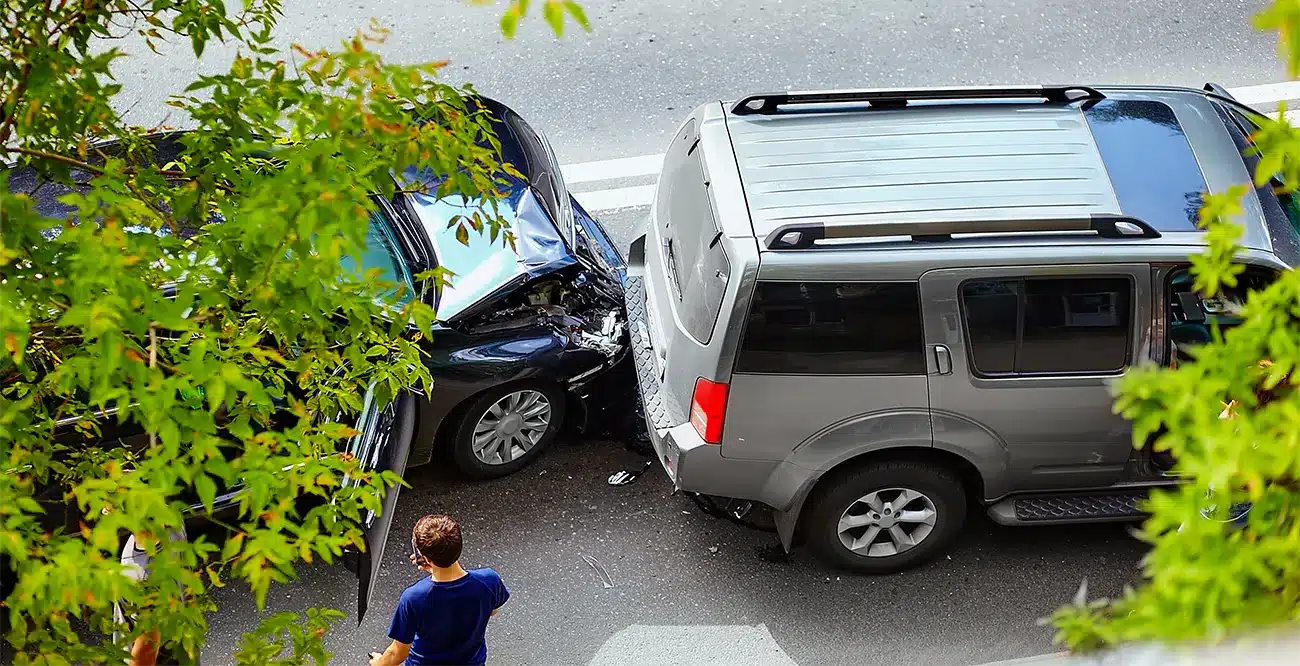
The laws involving personal injury and compensation are anything but simple, and victims need to have the best possible representations. Burg & Brock boasts a long history of success, with more than $1 billion raised in terms of settlements and legal judgments. Past results do not guarantee future outcomes. Just as important, we work on a contingency fee basis, which means we don’t get paid until after our clients receive money and so, as the best Uber accident lawyers, our services are available to working people who simply cannot afford to pay expensive legal retainer fees.
Rideshare and gig-driver work covers Uber, Lyft, Amazon Flex, DoorDash, and others. Below are the variants and city pages most relevant to Los Angeles passengers and drivers.
Talk to one of our attorneys: Cameron Yadidi Brock · Artin Fiterz, Esq. · Greg Diarian · Craig D. Rackohn · Lena G. Karaminassian · Isaac Radnia
Rideshare drivers in California operate as Transportation Network Company drivers under Public Utilities Code sections 5440 through 5443, which the California Public Utilities Commission enforces through Decision 13-09-045 and successor decisions. Insurance requirements for TNCs are codified at Public Utilities Code section 5433, which requires $1 million in liability coverage during ride-acceptance and during a ride. Driver-classification disputes arise under Labor Code section 2775 and the codification of the ABC test from Dynamex.
Insurance Code section 11580.2 governs uninsured and underinsured motorist coverage that may stack on top of the TNC policy. Personal injury limits run two years under Code of Civil Procedure section 335.1. Public-entity defendants for road-defect contributions require a six-month government claim under Government Code section 911.2. CPUC regulations and the Public Utilities Code are searchable through leginfo.legislature.ca.gov.
Dynamex Operations W. v. Superior Court (2018) 4 Cal.5th 903 announced the ABC test for distinguishing employees from independent contractors, adopting a presumption of employment that the hiring entity must rebut. The Legislature codified Dynamex in AB 5, and Proposition 22 carved out a partial exception for app-based drivers that the California Supreme Court reviewed in subsequent litigation. The classification analysis affects respondeat superior liability and the availability of workers'-compensation alternatives in rideshare cases.
Comparative fault under Li v. Yellow Cab Co. (1975) 13 Cal.3d 804 applies to rideshare crashes the same as any other motor vehicle case. Damages limits from Howell v. Hamilton Meats & Provisions, Inc. (2011) 52 Cal.4th 541 and Pebley v. Santa Clara Organics, LLC (2018) 22 Cal.App.5th 1266 apply with full force. Verify each citation at Justia California Case Law, and read the Public Utilities Code at leginfo.legislature.ca.gov.
Coverage depends on the driver's app status at the moment of impact. When the app is off, the driver's personal auto policy is primary. When the app is on but no ride has been accepted, a contingent TNC policy provides $50,000 per person and $100,000 per accident under Public Utilities Code section 5433. Once a ride is accepted or the passenger is in the vehicle, the TNC's $1 million liability policy is primary. The carrier-app data is essential to establish app status and is typically subpoenaed early.
Passengers injured during an active ride can typically claim against the TNC's $1 million liability policy without needing to sue Uber or Lyft as a corporate defendant, because the carrier admits coverage under the TNC policy. Direct claims against the corporate TNC for negligent vetting, retention, or app design are sometimes pursued in egregious cases. Arbitration clauses in passenger terms of service often attempt to compel disputes to private arbitration, with mixed enforceability under California law.
The TNC's uninsured and underinsured motorist coverage steps in when the at-fault driver has no insurance or insufficient limits. TNC policies are required to include UM/UIM coverage that matches the liability limits, providing $1 million in coverage during an active ride. The passenger can also pursue the at-fault driver's policy in parallel, with the TNC UM/UIM acting as excess. Coordinating multiple coverage sources requires careful claim handling and typically benefits from prompt counsel involvement.
Adult plaintiffs have two years under California Code of Civil Procedure section 335.1. Property damage claims have three years under section 338. Public-entity defendants for road-defect contributions require a six-month claim under Government Code section 911.2. Minor passengers have until two years after their 18th birthday. Wrongful-death claims arising from a rideshare crash also have two years under section 335.1. The limitation period runs from the date of the crash, not the date the rider noticed injury symptoms.
Under Dynamex Operations W. v. Superior Court and AB 5, the ABC test presumes employment status unless the hiring entity proves the worker is free from control, performs work outside the usual business, and is engaged in an independent trade. Proposition 22 created a partial carveout for app-based drivers. The classification matters less for passenger and third-party injury claims because the TNC insurance applies regardless of classification, but it matters for direct corporate liability and workers'-compensation alternatives in driver-injury cases.
Yes. Distracted driving caused by app interaction supports an ordinary negligence claim against the driver and may support a direct claim against the TNC for app design that encourages distraction. Cell-phone forensics and TNC backend logs reconstruct app activity at the moment of impact. CVC section 23123 prohibits hand-held cell phone use while driving and supplies a negligence-per-se theory when the driver was holding the phone. The combination of these claims typically increases case value substantially.
Pedestrians and cyclists struck by a rideshare driver during an active ride generally have access to the TNC's $1 million liability policy. Outside an active ride, the driver's personal policy applies and the contingent TNC coverage may be triggered. Pedestrian and cyclist injuries are often catastrophic and can exhaust the available limits, in which case underinsured motorist coverage on the victim's own household policy may apply. Crosswalk and right-of-way analysis under the Vehicle Code drives liability in these cases.
Yes. California law does not require an injured claimant to give a recorded statement to a third-party insurer. Adjusters for TNC carriers are trained to ask questions designed to lock the injured party into early statements before the full extent of injury and fault is known. Statements to the claimant's own carrier are usually required by the cooperation clause of their policy, but those statements benefit from advance preparation. Anything recorded is later used by the defense and limits the claim.
Damages include past and future medical expenses, past and future lost earnings, pain and suffering, emotional distress, scarring and disfigurement, and loss of consortium for spouses. Howell v. Hamilton Meats limits past medical recovery to amounts paid by health insurance, with Pebley v. Santa Clara Organics carving out plaintiffs treating outside insurance. Future medicals are forecast by treating physicians and life-care planners. Catastrophic injuries routinely exhaust the $1 million TNC limit and require pursuit of UM/UIM stacks.
TNC backend data reconstructs app status, ride identifiers, GPS tracks, the route, the assigned driver, and the passenger. Driver background-check records under Public Utilities Code section 5445.2 disclose any prior criminal or driving-record disqualifications. Rating histories show whether the carrier had notice of unsafe driving complaints. The rider's app screenshots and emails confirming the ride are also important. Preservation letters to the TNC must go out within days of retention because TNC retention policies vary.
Class certification is possible in narrow circumstances, but California rideshare class actions tied to driver vetting and app design have run into arbitration-clause and individualized-injury hurdles. Most personal-injury cases proceed individually. Mass-action consolidation is sometimes used when multiple plaintiffs sustained injuries in the same crash or pattern of crashes, particularly in commercial vehicle and shuttle-style operations where the TNC operates a fleet. The viability of any class or mass approach depends on the specific facts.
Burg & Brock handles rideshare cases on a contingency fee basis under Business & Professions Code section 6147, meaning no fee unless we recover. Case costs, including TNC subpoenas, expert witnesses, deposition transcripts, and trial graphics, are advanced and reimbursed only from any recovery. The fee schedule is disclosed in writing at the outset. Consultations are free and confidential, and the firm coordinates directly with the TNC carrier from the first day of representation.
| Severity Tier | Typical Injuries | Settlement Range |
|---|---|---|
| Tier 1 — Minor | Soft tissue, brief treatment, full recovery | $10,000 — $50,000 |
| Tier 2 — Moderate | Disc injuries, injections, residual symptoms | $50,000 — $200,000 |
| Tier 3 — Serious | Fractures, surgery, ongoing limitations | $200,000 — $750,000 |
| Tier 4 — Severe | Multiple surgeries, permanent disability | $750,000 — $2,500,000 |
| Tier 5 — Catastrophic | Brain injury, paralysis, wrongful death | $2,500,000+ |
Past results do not guarantee future outcomes. Each case is unique and case results depend on a variety of factors.
Cases filed in Los Angeles County are routed by the location of the incident and the residence of the parties. Most personal injury filings are handled at the Stanley Mosk Courthouse at 111 N. Hill Street, which serves as the central civil hub. West-side incidents may be filed at the Santa Monica Courthouse, while events in the eastern San Fernando Valley typically route to the Van Nuys Courthouse East. South Bay matters proceed at the Torrance Courthouse, and South-Central LA cases are handled at the Compton Courthouse. Long Beach and the surrounding ports route to the Governor George Deukmejian Courthouse. Federal claims, including those involving federal preemption or diversity jurisdiction, are filed in the U.S. District Court for the Central District of California.
This page is reviewed by Cameron Yadidi Brock, a Burg & Brock attorney whose practice includes rideshare and Transportation Network Company injury cases governed by Public Utilities Code sections 5440 through 5443. His work covers subpoenas for TNC backend data, ride-status logs, and driver vetting records to establish coverage and corporate fault, along with coordination with biomechanical engineers and treating physicians to document the full injury picture for passengers, third-party drivers, pedestrians, and cyclists.
Cameron Yadidi Brock is admitted in California and verified at Cal Bar #183112. Reviewed by Cameron Yadidi Brock, CA Bar #183112. Last updated: 2026-07-02.
Attorney Advertising. The information on this page is for general educational purposes and is not legal advice. Reading this page does not create an attorney-client relationship. Past results do not guarantee future outcomes.
It depends on the driver's app status at the moment of the crash. If the app is off, only the driver's personal auto insurance applies. If the app is on but no passenger is matched, $50,000/$100,000/$25,000 contingent liability applies. If a passenger is on board or matched, the $1 million Uber/Lyft policy applies.
Cases under the $1 million Uber/Lyft policy resolve in the $100,000 to $1 million range depending on injury severity. Burg & Brock recovered a $3.2 million rideshare verdict that exceeded the policy through an excess-coverage claim. Catastrophic injury cases push toward and beyond policy limits.
You file against the Uber/Lyft commercial policy if the driver was on a trip or had a passenger matched. Pedestrian cases routinely command higher pain-and-suffering awards because injuries from a vehicle strike are severe. Vehicle Code section 21950 establishes the driver's duty to yield.
Two years from the accident date under California Code of Civil Procedure section 335.1. Notify Uber/Lyft as soon as possible (their portal closes claims quickly) but the legal deadline is two years.
You file against the Uber/Lyft $1 million policy as a passenger. Passengers have a strong liability position because they have no control over the driving. Burg & Brock handles these as standard rideshare-passenger cases.
Their first move is often to argue the driver was offline at the moment of impact (which drops you to personal insurance only). We pull the trip data, GPS logs, and app status from Uber through formal discovery to establish the driver was on a trip.
You file against both: the at-fault driver's policy first, then the Uber UM/UIM coverage (up to $1 million) if the at-fault driver was underinsured. The Uber policy stacks on top of the other driver's coverage.
Under California Proposition 22 (effective 2021), Uber and Lyft drivers are independent contractors for purposes of labor law but the companies remain liable for accidents during trips. Liability is not affected by the employment classification.
Contingency. No fee unless we recover. Standard 33 and 1/3 percent before suit, 40% after suit. Free consultation.
Yes, through the in-app safety report or website. Do this within 24 hours. Do not give a recorded statement until you have spoken to an attorney.
Choose which categories of cookies and tracking technologies you allow on burgbrock.com. Strictly necessary cookies are always on so the site can function.
Required for the site to load, keep you signed in, and remember your preference choice. Always active.
Lets us see which pages people visit so we can improve the site. No personal data is sold.
Allows ad partners to measure the performance of ads you may have seen and show more relevant ads.
Powers extras like chat, embedded video, and remembered form fields. Turning these off may break some features.