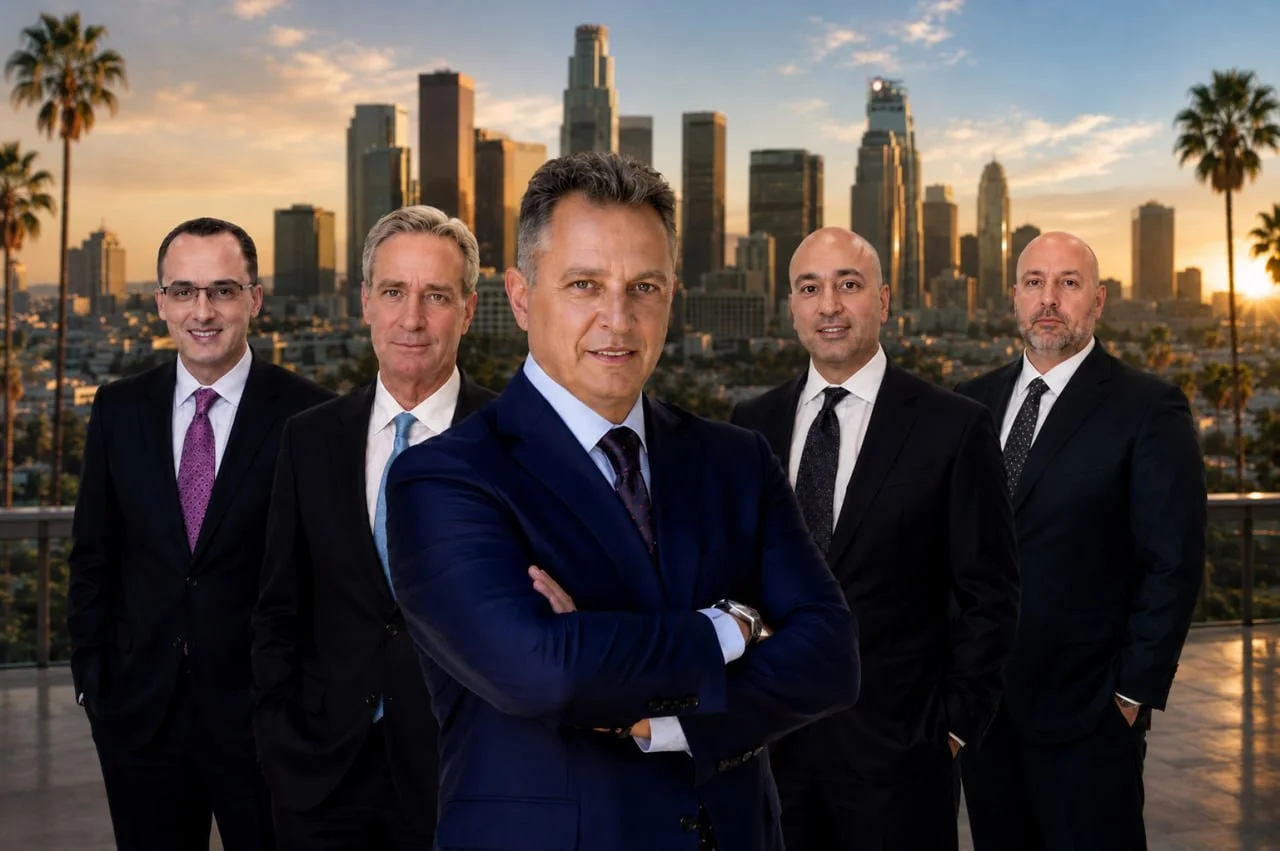
Total recoveries for injured clients.
Years of catastrophic
injury experience.
Were You Injured While Working for Amazon or a Delivery Service Partner?
Accidents while loading, unloading, or delivering packages can lead to serious injuries.
Warehouse conditions, heavy lifting, and equipment accidents can result in workplace injuries.
Collisions involving delivery vans or other vehicles may qualify for compensation.
Amazon delivery drivers and warehouse employees face physically demanding working conditions that can lead to serious injuries. Below are some of the most common workplace accidents reported by workers.
Accidents involving delivery vans can occur during routes, parking, or while navigating tight residential streets. These collisions may result in serious injuries for...
Accidents involving delivery vans can occur during routes, parking, or while navigating tight residential streets.
Constant lifting, scanning, and package handling can lead to repetitive stress injuries affecting the wrists, shoulders, and back over time.
Handling heavy packages or performing repetitive lifting tasks can cause muscle strains, herniated discs, and other serious back injuries.
Forklifts, conveyor belts, and warehouse machinery can malfunction or be improperly maintained, putting workers at risk of serious workplace accidents.
Busy loading docks create hazardous environments where workers may suffer injuries from moving vehicles, falling cargo, or unsafe working conditions.
Call Us and Speak Directly to an Attorney!
If you were injured while delivering packages or working in an Amazon warehouse, our legal team will guide you through every step of the process. We focus on making the legal process simple and stress-free while pursuing the compensation you deserve.
Here’s How We Make It Happen:

Amazon workplace injury cases are often more complicated than typical workplace accidents. Multiple companies, contractors, and insurance policies may be involved, making it difficult for injured workers to receive fair compensation without experienced legal guidance.
Case Results


FAQ
Have more questions?
Speak with our legal team to learn more about your rights and whether you may qualify for compensation.
Our attorneys have been honored by respected legal organizations for trial skill, ethics, and client results.











If you were injured while delivering packages or working at an Amazon facility, you may be entitled to compensation.
Free Consultation • No Fees Unless We Win
Amazon Flex drivers, DSP route drivers, and customers struck by Amazon-branded vans face a different liability landscape than ordinary auto crashes. The interplay between Amazon's two-day delivery pressure, AB-5's employee-classification rules, and the Delivery Service Provider (DSP) corporate structure decides who pays — and how much. Burg & Brock has handled Amazon Flex and DSP claims across Los Angeles County since the program scaled in 2018. Speak with attorney Greg Diarian, who leads our rideshare and gig-driver litigation, for a free case review.
Free Case Evaluation (888) 528-8595
Three patterns drive most of the Amazon-employee crash files we open in Los Angeles. Each one points to a different defendant and a different theory of liability.
Amazon's published quotas tell on themselves in discovery. Internal training materials list a target of 999 packages per route, with rescue dispatches kicking in only after a driver falls forty-plus stops behind. Drivers describe skipping bathroom breaks, eating in the van, and running the stop-rate metric (SPS) the company tracks in real time. We routinely depose the dispatcher and pull the Mentor app and Cortex telematics data to map the driver's behavior in the 30 minutes before impact. When telematics show the driver was 18 stops behind quota and accelerating through a stale yellow, the schedule itself becomes the negligence theory — not just the driver's choice.
AB-5 (codified at Labor Code §2775) replaced the older Borello multi-factor test with the three-prong ABC test from Dynamex. To classify a worker as an independent contractor, Amazon must prove all three prongs:
Amazon almost always loses prong B with Flex drivers. Delivery is unambiguously inside the usual course of Amazon's business. That single point, paired with the level of route-by-route control Amazon exerts through the Flex app, supports an employee finding for liability purposes — which means respondeat superior reaches Amazon's insurance, not just the driver's personal policy.
If you were hurt while driving as a Flex or DSP employee, Labor Code §3600 generally restricts your remedy against your employer to the workers' compensation system. Labor Code §3700 requires every California employer to carry coverage. But the bar is not the end of the story. Third-party tort claims against the at-fault other driver, against a defective-equipment manufacturer, and (where the route assignment itself caused the crash) against Amazon as the route-controller are routinely viable in addition to the workers' compensation claim. We coordinate the workers' comp file with the third-party suit so the lien math works in your favor at settlement.
Customers, pedestrians, cyclists, and other motorists hit by an Amazon-branded van aren't bound by the workers' comp bar at all. The full tort menu is open: Civil Code §1714 ordinary negligence, vicarious liability for the driver's conduct under respondeat superior, and direct claims against Amazon and the DSP for negligent hiring, training, and supervision under Diaz v. Carcamo. The two-year personal-injury statute at CCP §335.1 governs the filing deadline; for wrongful death the same two-year clock at CCP §335.1 applies, measured from the date of death.
One of the harder parts of these cases is mapping which policy responds first. The typical stack:
Order matters. A demand sent to the wrong layer first can run out the response window on a layer that should have been notified earlier. We tender to all layers in writing on day one of representation.
Amazon and DSPs cycle through telematics and dashcam data on rolling retention windows. We send a litigation hold letter the same day we open the file, demanding preservation of:
If the spoliation letter goes out late, the data is gone. CCP §2023.030 sanctions for late or destroyed records can shift the case — but only if the preservation demand was timely.
Compensatory damages in an Amazon-delivery crash track the standard CACI 3900-series instructions:
Where Amazon's conduct rises to "despicable" with a "willful and conscious disregard" for safety — the standard at Civil Code §3294 — punitive damages become available. Internal documents showing dispatchers were trained to ignore SOS button presses, or that a DSP owner kept dispatching a driver flagged for hours-of-service violations, support the punitive theory.
The figures below summarize the range of past Amazon-delivery and gig-driver outcomes our team has handled or tracked. Each case turns on its own facts; past results do not guarantee future outcomes (Cal. Rules of Prof. Conduct Rule 7.1).
| Injury severity | Typical settlement range | Driving factors |
|---|---|---|
| Soft-tissue, full recovery | $25,000 – $90,000 | Treatment under 6 months; minimal lost wages |
| Disc injury with injection therapy | $90,000 – $400,000 | Documented herniation; conservative care exhausted |
| Surgical orthopedic injury | $400,000 – $1.5M | Fusion or joint reconstruction; permanent restriction |
| Traumatic brain injury, moderate | $750,000 – $5M | Imaging-confirmed; cognitive deficits documented |
| Catastrophic / wrongful death | $2M – policy limits | Punitive exposure; dependent survivors |
Most Amazon-delivery crash suits we file in LA County land at the Stanley Mosk Courthouse (111 N. Hill Street, downtown Los Angeles), which handles Personal Injury Court (Department 1) for the Central District. Crashes that occurred in the South Bay or Long Beach often go to the Long Beach Courthouse, and Antelope Valley crashes go to the Michael Antonovich Courthouse in Lancaster. Venue is governed by CCP §395 (defendant residence) and CCP §395.5 (location of accident for corporate defendants). For larger cases against Amazon corporate, we sometimes consider King County, Washington (Amazon HQ) where personal jurisdiction allows.
Two recent statutes strengthen our hand in DSP cases. AB-1654 requires warehouse-distribution employers to disclose any quota that affects an employee's pay or discipline, and prohibits quotas that prevent meal and rest breaks (Labor Code §2100 et seq). AB-1003 (Labor Code §487m) makes intentional theft of wages over $950 a felony — reaching DSP owners who shave timecards or fail to pay overtime. We pull the production records under PAGA discovery and use the violations as pressure on the corporate defendants in the underlying tort suit.
Standard Amazon delivery vans (Sprinter / Ram ProMaster / Ford Transit) usually fall under the 10,001-lb threshold that triggers 49 CFR Part 395 hours-of-service rules. But step vans, box trucks, and the larger DSP fleet vehicles do trigger them. The 11-hour driving / 14-hour on-duty / 70-hour-in-8-day caps are firm. Electronic Logging Device (ELD) data subpoenaed under Part 395.22 is some of the cleanest evidence available in a fatigued-driver case.
Often, yes. Under Dynamex and AB-5 we argue the Flex driver was an Amazon employee for liability purposes, which pulls Amazon's commercial policy and corporate balance sheet into the case alongside the driver's personal policy.
That is the DSP. Amazon contracts with hundreds of DSPs in California. The DSP carries the primary auto policy, but Amazon is typically named as additional insured, and Amazon corporate is reachable through negligent-hiring and route-control theories under Diaz v. Carcamo.
Probably both. The third-party at-fault driver is liable under standard tort rules. In parallel, your Flex commercial coverage (and possibly Amazon's classification of you as an employee for the day) opens a workers' compensation track. The third-party recovery has to coordinate with the comp lien.
Two years from the date of the crash for personal injury (CCP §335.1). Two years from the date of death for wrongful death. Workers' compensation has its own one-year filing window under Labor Code §5405 plus a 30-day employer notice requirement.
No. Early offers from Amazon's third-party administrator (often Sedgwick or Crawford) are anchored on the visible damage to the van, not on your medical trajectory. Disc injuries take 6 to 8 weeks to fully present on imaging. Signing the release before then closes the case for the lowball figure.
Yes. As a passenger you have no comparative-fault problem, and you can pursue the Flex driver's personal policy, the Amazon commercial layer, and any other at-fault third party in parallel.
That is exactly the punitive-damages fact pattern under Civil Code §3294. The route assignment becomes part of the proof. We subpoena the SPS metric, Cortex telematics, and dispatcher communications to show the schedule itself was incompatible with safe driving.
In California, the DSP's failure to carry coverage exposes its officers to personal liability under Labor Code §3700.5 and opens a claim against the Uninsured Employers Benefits Trust Fund. Amazon's exposure depends on whether we can show enough control to make Amazon a joint employer for comp purposes — that is a fact-specific fight.
Nothing. We handle Amazon-delivery crash cases on a contingency-fee basis — no recovery, no fee. Costs (filing, depositions, expert reports) are advanced by the firm and reimbursed only at successful resolution.
Possibly. The 1099 classification does not control. Under AB-5 and the ABC test, if Amazon cannot satisfy all three prongs, you were an employee for workers' compensation purposes regardless of the form they sent at year end.
No. Hit-and-run on an Amazon-branded van is recoverable two ways: through your own uninsured-motorist coverage (CIC §11580.2) and, if we can identify the route through delivery records and surveillance, through the DSP and Amazon directly.
Across Los Angeles County and statewide. Most filings go to Stanley Mosk Courthouse in downtown LA, with overflow to Long Beach, Norwalk, Pomona, and the Antonovich Courthouse in Lancaster. We also file in Riverside, San Bernardino, Orange, and Kern counties when venue requires.
Amazon-delivery cases sit at the crossroads of commercial-vehicle law, gig-economy classification disputes, and high-volume corporate insurance defense. Most general personal-injury firms handle one of those, not all three. Greg Diarian leads our gig-economy practice and has worked Flex, Uber, Lyft, DoorDash, and Instacart driver claims since 2018. The firm carries the contingency cost on these cases — deposition transcripts, accident-reconstruction experts, and the FMCSA-data subpoenas that pin liability on the corporate defendant rather than the driver.
Attorney advertising. The information on this page is general; it is not legal advice for your specific situation. Past results do not guarantee future outcomes (Cal. Rules of Prof. Conduct, Rule 7.1). Reading this page does not create an attorney-client relationship. Last updated 2026-05-08. Reviewed by attorney Greg Diarian.
Choose which categories of cookies and tracking technologies you allow on burgbrock.com. Strictly necessary cookies are always on so the site can function.
Required for the site to load, keep you signed in, and remember your preference choice. Always active.
Lets us see which pages people visit so we can improve the site. No personal data is sold.
Allows ad partners to measure the performance of ads you may have seen and show more relevant ads.
Powers extras like chat, embedded video, and remembered form fields. Turning these off may break some features.