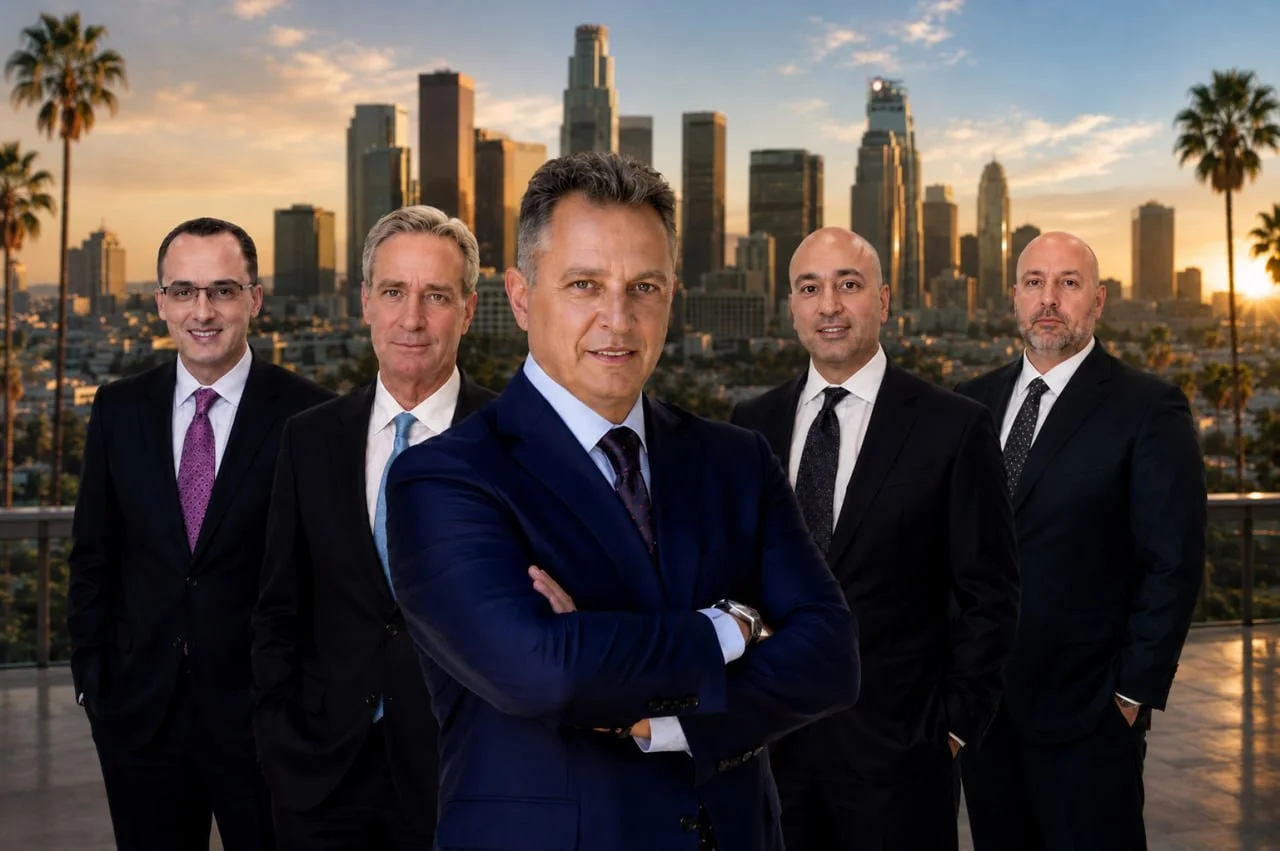
Class 3-7 last-mile delivery vehicles operate at the intersection of the federal motor carrier framework and California Vehicle Code rules on parking, passing, and pedestrian right-of-way — different physics, different defendants, different evidence than a Class 8 case.
Reach a lawyer 24/7. The consultation is free. You owe no fee unless we recover for you. Seven California offices: Sherman Oaks (HQ), Glendale, Beverly Hills, Irvine, Bakersfield, Visalia, and Modesto.
$1B+
Recovered for clients
3,000+
Cases handled
25+
Years in practice
7
California offices
What a delivery truck case actually looks like
The delivery-truck case is its own animal. Class 3 through Class 7 vehicles — Sprinter vans, step vans, P-series walk-in trucks, box trucks under 26,000 pounds, and the smaller fleet of last-mile contractors — operate under a different mechanical and legal profile than the Class 8 over-the-road tractor-trailer fleet. The drivers are typically employees or independent contractors of large national carriers (Amazon Logistics and its DSP network, FedEx Ground, UPS, USPS, food-delivery aggregators), making 100 to 250 stops per shift, frequently double-parking, frequently encroaching on bicycle lanes, frequently working sidewalks and crosswalks at delivery zones. The injuries that follow are pedestrian strikes, cyclist strikes, sidewalk-zone collisions, and the rear-end and lane-departure crashes that come with rushed-route schedules.
Burg & Brock has handled California delivery-truck cases at scale, including a sister page on the firm's California-wide delivery-truck practice. This page is the LA-specific spawn — built to focus on the freeway-and-surface-street environment of Los Angeles County, the parking and passing rules under the California Vehicle Code that govern delivery-vehicle operation, and the layered fleet structure (parent corporation, contracted DSP, contracted independent owner-operator) that decides who pays.
The commercial-vehicle practice is led by Artin Fiterz, Cal Bar verification #323879. The case workup borrows the spoliation discipline and FMCSR analysis from the firm's Class 8 practice, scales it down to Class 3-7 equipment and routing, and adds the city-traffic-engineering evidence that delivery-zone pedestrian and cyclist cases require.
Your rights under California law
A Los Angeles delivery-truck case turns on a hybrid of California Vehicle Code, federal motor-carrier regulation (where the vehicle and operation cross the federal threshold), and city traffic-engineering rules. The principal authorities:
FMCSA SMS data for the carrier (Amazon Logistics, FedEx Ground, UPS, contracted DSPs).
How Burg & Brock works your case
A delivery-truck case is built quickly because last-mile fleets cycle vehicles, drivers, and routes faster than the over-the-road fleet. A vehicle assigned to a route on Tuesday may be reassigned to a different DSP on Friday; a driver who was on the route may have moved to a different ISP by the end of the month; the dashcam unit may have been swapped out during a routine maintenance cycle. The plaintiff's attorney has to capture the operational picture as it existed on the day of the crash, before fleet turnover blurs it. That is what the early-stage spoliation discipline is designed to do, and it is why a delivery-truck case worked at the same pace as a passenger-vehicle case typically loses the most decisive evidence within the first month. The workflow:
Spoliation letters within 72 hours. Letters to the parent carrier (Amazon Logistics, FedEx Ground, UPS, etc.), the contracted DSP or owner-operator, and any independent contractor in the chain. Preserve telematics data, GPS records, dispatch logs, route-stop records, dashcam footage, and the vehicle in pre-repair condition.
Fleet-structure mapping. Who owned the vehicle? Who employed the driver? Who controlled the route and stop schedule? The answer is rarely "the brand on the truck." We map the Amazon-DSP, FedEx Ground-ISP, or owner-operator structure on every case.
Scene reconstruction. Parking position, sight lines, crosswalk geometry, bike-lane markings. City of Los Angeles traffic-engineering data is subpoenaed where relevant.
Surveillance video pull. Storefront cameras, neighbor cameras, and ring-doorbell cameras at the delivery scene. We canvas the block within the first week.
Medical roadmap. Pedestrian and cyclist injuries are catastrophic disproportionately often; the medical workup mirrors the catastrophic-injury practice.
Demand and trial. Demand reaches every defendant in the fleet structure with appropriate liability theories. Trial follows when the offer underreaches the floor of a reasonable jury range.
One detail clients regularly ask about: who pays for the medical care while the case is pending? Answer depends on coverage. Health insurance is one route, with the plan's subrogation right managed at the end of the case. Med-pay coverage on an auto policy may apply for vehicle-occupant clients. Treatment on a medical lien — providers paid out of the eventual recovery — is sometimes available with select LA County trauma and orthopedic providers. The right combination depends on the policy terms, the providers, and the projected case value, and it is decided early.
Common Los Angeles delivery-truck collision types
Pedestrian strikes at the delivery zone. Driver returns to the vehicle without checking sight lines; pedestrian crossing or walking past gets struck.
Cyclist strikes from doored bicycle lanes. Vehicle parked in or adjacent to a bicycle lane in violation of CVC §21209 or §22500; cyclist strikes vehicle or door.
Crosswalk strikes. Driver fails to yield to pedestrian under CVC §21950.
Double-parking visibility crashes. Vehicle stopped in travel lane forces traffic into adjacent lane; following vehicles do not see the stopped truck.
Backing collisions. Driver backs out of the delivery space without checking sight lines; pedestrian, cyclist, or vehicle behind gets struck.
Door-strike collisions. Driver opens cab or cargo door into a passing cyclist or pedestrian.
Driver inattention and texting under CVC §23123.5.
Route-induced fatigue and time-pressure performance metrics imposed by parent carriers.
Inadequate training of contracted DSP drivers.
Negligent hiring and retention by parent carrier or DSP.
Liability theories
The delivery-truck liability stack reflects the fleet structure:
The driver — direct negligence.
The driver's direct employer — DSP, ISP, or owner-operator entity.
The parent carrier (Amazon Logistics, FedEx Ground, UPS) under negligent-selection, joint-employer, or apparent-agency theories. The viability of these theories turns on the specific contract structure and operational control.
The vehicle owner where separate from the driver's employer.
A government entity for dangerous-condition-of-public-property claims under Government Code §835.
How damages break down
Economic damages
Past and future medical bills
Surgical, hospital, and rehabilitation costs
Prescription medication and durable medical equipment
Requires clear and convincing evidence of malice, oppression, or fraud
Drunk-driving and grossly reckless conduct can qualify
Calibrated to defendant's wealth and conduct
Designed to deter, not just compensate
Appellate review limits the multiplier
Reported settlement and verdict ranges
Case profile
Injuries
Reported range
Pedestrian strike at delivery zone
Catastrophic injury, surgical fixation
$500k–$3M typical CA disclosure range
Cyclist door-strike, traumatic brain injury
Closed-head injury, ongoing rehabilitation
$750k–$5M depending on severity
Crosswalk strike, multiple fractures
Surgical intervention, lasting impairment
$300k–$2M
Double-parking-induced rear-end collision
Multiple plaintiffs, varying severity
$500k–$3M across plaintiff group
Wrongful death, last-mile delivery vehicle
Surviving heirs
$1M–$8M+ subject to coverage
Past results do not guarantee future outcomes. Settlement values turn on liability, severity, insurance limits, and case-specific facts.
Why work with Burg & Brock
Burg & Brock's commercial-vehicle practice is led by Artin Fiterz, Cal Bar verification #323879. The firm has tried delivery-truck cases out of Los Angeles for more than two decades, and the practice has tracked the rise of the Amazon-DSP and FedEx Ground-ISP fleet model from the start.
Same-day spoliation discipline — telematics and dashcam evidence preserved before fleet-cycle erases it.
Working bench of accident reconstructionists, traffic-engineering experts, life-care planners, and forensic economists.
Seven California offices for client access; statewide trial coverage.
No fee unless we recover; contingency under California Rule of Professional Conduct 1.5.
Seven steps after the delivery-truck collision
Get medical care. Pedestrian and cyclist injuries underplay themselves at the scene; ER evaluation creates the contemporaneous record.
Photograph the truck with brand markings, license plate, and any USDOT or MC numbers. Photograph the scene including parking position, bike-lane markings, and crosswalks.
Get the police report number. LAPD or local PD; CHP for freeway incidents.
Identify witnesses with phone numbers, including any storefront employees who saw the incident.
Decline recorded statements from the carrier's adjuster.
Preserve any damaged personal property — bicycle, helmet, clothing, footwear.
Talk to a commercial-vehicle attorney within the first week so spoliation letters reach the parent carrier and the contracted DSP before telematics data cycles.
Two-year clock under Code of Civil Procedure §335.1. California gives an injured person two years from the date of injury to file a personal-injury lawsuit
(CCP §335.1). Government-entity claims have a much shorter six-month deadline under
Government Code §911.2. Miss either deadline and the claim is gone.
Where these cases are filed
The Los Angeles Superior Court routes civil personal-injury filings to specific courthouses based on the location of the incident and the parties. Cases tied to this practice area typically land at:
Stanley Mosk Courthouse — 111 N. Hill Street, Los Angeles (general civil)
Spring Street Courthouse — 312 N. Spring Street, Los Angeles (complex civil)
U.S. District Court, Central District of California — 350 W. 1st Street, Los Angeles (federal venue for diversity cases against out-of-state parent carriers)
Talk to a delivery-truck trial attorney before fleet evidence cycles
No fee unless we win. Consultations are confidential.
Who is responsible when an Amazon delivery driver hits me — Amazon or the DSP?
Both can be, depending on the contract structure and operational control. Amazon Logistics' Delivery Service Partner (DSP) program treats the DSP as an independent contractor, but the case law on joint-employer and apparent-agency theories is evolving and the specific facts about routing, training, dress code, performance metrics, and equipment provision can support claims against the parent. We map the fleet structure on every Amazon case and pursue both layers where the facts support it.
Is FedEx Ground different from FedEx Express in a crash case?
Yes. FedEx Ground operates through Independent Service Providers (ISPs) — contracted owner-operator companies that lease equipment from FedEx and run routes. FedEx Express is more directly an employee-driven operation. The liability theories against the FedEx parent differ between the two divisions; understanding which division was running the route on the day of the crash is part of the early case workup.
How long do I have to file a delivery-truck case in California?
Two years from the date of injury under CCP §335.1. If a public entity is involved (a USPS vehicle, for example, which is treated under the Federal Tort Claims Act with a six-month administrative-claim deadline), additional federal procedural rules apply. USPS cases are uniquely procedural — talk to counsel immediately.
Are USPS delivery-truck cases different?
Significantly. USPS is a federal agency; injury claims against USPS are governed by the Federal Tort Claims Act (FTCA) and require a Standard Form 95 administrative claim filed with USPS within two years of the injury. After the agency denies the claim or six months pass without a decision, suit can be filed in federal district court. USPS cases are not handled like private-carrier cases; the FTCA procedural requirements are jurisdictional and unforgiving.
What does a DSP or ISP arrangement mean for the case?
Delivery Service Partner (Amazon) and Independent Service Provider (FedEx Ground) arrangements are contracted-out fleet structures. The driver is an employee of the DSP/ISP, not directly an employee of Amazon or FedEx. The parent carrier's liability is contested on a joint-employer or apparent-agency theory, and the answer turns on the contract structure and the actual operational control. We pull the contract through discovery and run the joint-employer analysis on every case.
Can I recover for being struck while in a bicycle lane?
Yes. CVC §21209 restricts motor-vehicle operation in bicycle lanes and CVC §22500 regulates parking violations. Delivery-truck operators who park in bicycle lanes or door cyclists from parked positions face a clean negligence-per-se argument under these statutes. Cyclist comparative-fault is sometimes argued; Li v. Yellow Cab pure comparative fault still allows recovery proportional to fault allocation.
Are punitive damages available in a delivery-truck case?
Yes when conduct meets the malice/oppression/fraud standard under Civil Code §3294. Driver impairment, conscious-disregard-of-safety conduct, and pattern-and-practice violations of route-pressure-induced safety failures have all supported punitive findings in California.
How is route-pressure documented in this kind of case?
Through telematics and dispatch records. Last-mile carriers track driver performance against stop-time and route-completion metrics; aggressive metrics that incentivize unsafe driving have been admitted as evidence of negligent supervision and corporate-policy contributions to crashes. We subpoena the metrics and the carrier's internal communications about driver-safety vs. route-completion tension.
Will my case settle or go to trial?
Most delivery-truck cases settle, with settlement value tracking what a jury would do at trial. Cases that try are usually those with disputed fleet-structure liability or where the parent carrier disputes joint-employer status hard. We prepare every case for trial; settlement, when it comes, comes at trial-grade value.
What if the delivery-truck driver was an independent contractor?
Independent-contractor status in last-mile delivery frequently does not survive scrutiny. California's Dynamex and Borello frameworks, the federal joint-employer doctrine, and the carrier's actual operational control over routing, training, and equipment combine to make the parent carrier vicariously liable in many cases. The contract label is not dispositive.
Can I still recover if I was partly at fault?
Yes. California is a pure comparative-fault state under Li v. Yellow Cab (1975) 13 Cal.3d 804. The plaintiff's percentage of fault reduces — but does not eliminate — the recovery. Even a 70 percent fault allocation against the plaintiff leaves a 30 percent recovery on the table.
How does Burg & Brock charge for a delivery-truck case?
Contingency. We advance investigation, expert, and litigation costs and earn a fee only if there is a recovery. The percentage is fixed in writing at the start under California Rule of Professional Conduct 1.5. There is no out-of-pocket cost during the case.
Choose which categories of cookies and tracking technologies you allow on burgbrock.com. Strictly necessary cookies are always on so the site can function.
Strictly necessary
Required for the site to load, keep you signed in, and remember your preference choice. Always active.
Analytics
Lets us see which pages people visit so we can improve the site. No personal data is sold.
Marketing
Allows ad partners to measure the performance of ads you may have seen and show more relevant ads.
Functional
Powers extras like chat, embedded video, and remembered form fields. Turning these off may break some features.