Attorney Advertising
Los Angeles lane-splitting motorcycle accident lawyer
California legalized lane splitting in 2017 — the only state in the country that has. The law is on the rider's side; the comparative-fault analysis is where the case gets fought.
Call (888) 528-8595 for a free consultation
Reach a lawyer 24/7. The consultation is free. You owe no fee unless we recover for you. Seven California offices: Sherman Oaks (HQ), Glendale, Beverly Hills, Irvine, Bakersfield, Visalia, and Modesto.
$1B+
Recovered for clients
What lane splitting actually is in California
Lane splitting — the practice of a motorcyclist riding between rows of stopped or slow-moving vehicles in the same direction of travel — was legalized in California by Assembly Bill 51, codified at Vehicle Code §21658.1, effective January 1, 2017. California remains the only state in the United States where lane splitting is expressly authorized by statute. The practical implication for Los Angeles riders on the I-405 Sepulveda Pass, the I-5 through Burbank, US-101 across the Hollywood Hills, and the I-10 commute is that lane splitting is legal — and the carrier on the other side of any crash that involved lane splitting cannot turn the legality itself into the basis for a contributory-fault finding. The fight is over how the rider performed the maneuver, not over whether the maneuver was permitted in the first place.
The California Highway Patrol publishes Lane Splitting Guidelines describing the conditions under which lane splitting is reasonably safe. The guidelines are not binding rules, but they inform how a jury evaluates the rider's conduct. Speed differential between the rider and the surrounding vehicles, the rider's absolute speed, the lane environment (between numbers one and two is generally safer than between four and five), the presence of large vehicles in the adjacent lanes, and weather conditions all factor into the comparative-fault analysis.
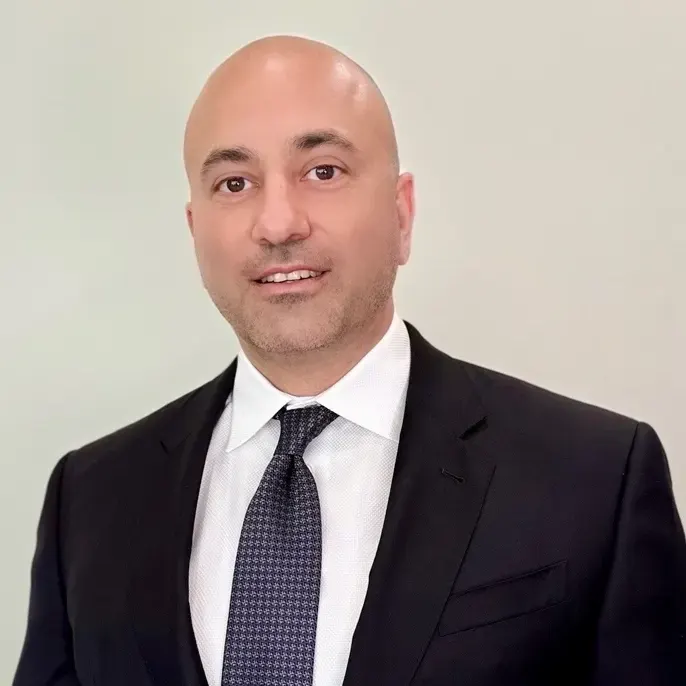
Burg & Brock's lane-splitting motorcycle practice runs out of the Sherman Oaks headquarters under Greg Diarian, Cal Bar verification #294014. Greg handles motor-vehicle and motorcycle cases statewide and has tried both lane-splitting and traditional motorcycle cases at the LA County Superior Court level.
Your rights under California law
Three California rules anchor every lane-splitting motorcycle case:
- Vehicle Code §21658.1 — California's lane-splitting authorization. Defines lane splitting as a motorcycle being driven between rows of stopped or moving vehicles in the same lane and provides authority for the CHP to issue safety guidelines.
- Vehicle Code §27803 — California's universal-helmet law for riders and passengers under all conditions.
- Code of Civil Procedure §335.1 — two-year statute of limitations.
The single controlling case on fault allocation is Li v. Yellow Cab Co. (1975) 13 Cal.3d 804. Li abandoned California's old contributory-fault rule in favor of pure comparative fault: a jury assigns a percentage of fault to each party, and the plaintiff's recovery is reduced — not eliminated — by the plaintiff's percentage. A rider found 30 percent at fault still recovers 70 percent of the verdict. A rider found 80 percent at fault still recovers 20 percent. Pure comparative fault is the rule in California; the carrier's argument that "the rider was lane splitting therefore the rider's the one at fault" does not survive contact with the rule.
Helmet law is the other piece of comparative-fault math riders need to know. CVC §27803 requires both rider and passenger to wear a properly fitted and fastened DOT-compliant helmet. A rider injured in a head-impact crash while not wearing a helmet, or wearing a non-compliant helmet, will face a comparative-fault argument that the helmet failure increased the head injury. The argument is fought with biomechanical-engineering evidence on the actual injury mechanism.
How Burg & Brock works your case
The first 30 days of a lane-splitting case set the value of the case. Speed-and-position evidence at the scene fades quickly; surveillance video cycles in days; eyewitness memory degrades.
- Scene preservation. Photographs of the bike, the involved vehicle(s), debris field, and skid marks. Drone overhead photography when feasible.
- Witness identification. Lane-splitting cases live and die on independent witnesses; surrounding-driver perception of the rider's speed differential and conduct is what the comparative-fault analysis turns on.
- Vehicle inspection. Mechanical engineer inspects the bike for damage patterns, the involved vehicle for damage geometry, and any video evidence (CHP cruiser dashcam, surrounding-vehicle dashcams).
- CHP report and sub-investigation. The CHP report is the starting point but not the final word. We investigate beyond the report when the report's narrative does not capture what the witnesses say.
- Medical roadmap. Helmet impact, road-rash patterns, and orthopedic injury patterns all need treating-physician documentation. Closed-head injury frequently presents 24-72 hours after a motorcycle crash and warrants neuro evaluation.
- Demand and trial. Demand structured around the comparative-fault math under Li, with the CHP Lane Splitting Guidelines incorporated as the conduct framework. Trial follows when the carrier underpays.
The carrier defending a lane-splitting case will typically lead with the highest comparative-fault allocation it can plausibly support, then negotiate downward only against documented pushback. The plaintiff's job in the first 90 days is to build the documented pushback — independent witnesses, surveillance video, and reconstruction expert opinion — that makes the carrier's opening allocation untenable.
Common lane-splitting collision patterns
Lane-change-into-rider collisions. Driver changes lanes without checking the gap; the rider was lawfully in the gap.
Door-strike collisions. Stopped-traffic driver opens door into the lane-split path.
Mirror strikes. Side-mirror impact at the moment of passage; injury level depends on speed differential.
Rear-end collisions while the rider is stopped between lanes. Trailing driver fails to perceive the rider in the gap.
I-405 Sepulveda Pass collisions. The most common geographic pattern in LA lane-splitting practice.
I-5 commute collisions. San Fernando Valley to downtown corridor; high differential during morning peak.
U-turn-from-second-lane collisions. Driver attempts a turn from the wrong lane while the rider is splitting.
Catastrophic helmet-impact collisions. Closed-head injury, traumatic brain injury, spinal-cord injury.
Common causes
- Lane changes without signaling under CVC §22107 and CVC §22108.
- Driver inattention and texting in violation of CVC §23123.5.
- Door-opening violations under CVC §22517.
- U-turn from the wrong lane under CVC §22100.5.
- Failure to look before changing lanes (per CHP investigation manual).
- Driver impairment under CVC §23152.
- Mechanical failure of the involved vehicle.
Liability theories
Lane-splitting cases typically reach two or three defendants:
- The driver of the vehicle involved in the collision.
- The owner of the vehicle (vicarious liability under CVC §17150).
- The driver's employer where the driver was in the course and scope of employment.
- A government entity for dangerous-condition-of-public-property claims under Government Code §835 (e.g., uneven pavement, inadequate signage, debris).
How damages break down
Economic damages
- Past and future medical bills
- Surgical, hospital, and rehabilitation costs
- Prescription medication and durable medical equipment
- Lost wages and reduced earning capacity
- Home and vehicle modifications
- Out-of-pocket expenses tied to the injury
Non-economic damages
- Physical pain and suffering
- Emotional distress and PTSD
- Loss of consortium for spouses
- Loss of enjoyment of life
- Disfigurement and scarring
- Loss of bodily function
Punitive damages
- Available under Civil Code §3294
- Requires clear and convincing evidence of malice, oppression, or fraud
- Drunk-driving and grossly reckless conduct can qualify
- Calibrated to defendant's wealth and conduct
- Designed to deter, not just compensate
- Appellate review limits the multiplier
Reported settlement and verdict ranges
| Case profile | Injuries | Reported range |
|---|
| Lane-change-into-rider, severe orthopedic injury | Multiple fractures, surgical fixation | $200k–$1.5M typical CA disclosure range |
| Door-strike collision, traumatic brain injury | Closed-head injury, ongoing neuro care | $500k–$3M depending on severity |
| Catastrophic spinal-cord injury, lane-split crash | Lifelong impairment, life-care plan | $2M–$10M+ |
| Rear-end while rider stopped between lanes | Multiple injuries, surgical intervention | $300k–$2M |
| Wrongful death, lane-splitting collision | Surviving heirs | $1M–$5M+ subject to fault allocation |
Past results do not guarantee future outcomes. Settlement values turn on liability, severity, insurance limits, and case-specific facts.
Why work with Burg & Brock
Burg & Brock's motorcycle practice is led out of the Sherman Oaks office by Greg Diarian, Cal Bar verification #294014. Greg handles motor-vehicle, motorcycle, and no-fault-overlap cases throughout California and has tried both lane-splitting and traditional motorcycle cases. The firm has handled motorcycle catastrophic-injury cases for more than two decades and works the comparative-fault analysis under Li v. Yellow Cab as part of every motorcycle case file.
- Statewide trial coverage from seven California offices.
- Working bench of accident reconstructionists, biomechanical engineers, and life-care planners.
- Members of the Consumer Attorneys of California and Consumer Attorneys Association of Los Angeles.
- No fee unless we recover; contingency under California Rule of Professional Conduct 1.5.
Seven steps after the lane-splitting collision
- Get medical care. Even when you feel fine. Closed-head injury after a motorcycle crash often presents 24-72 hours later.
- Photograph the bike, the vehicle, and the scene. Mirrors, doors, lane markings, and the resting position of both vehicles.
- Get the police report number. CHP for freeway crashes; LAPD or local PD for surface-street crashes.
- Identify witnesses. Surrounding-driver testimony is the difference in the comparative-fault analysis.
- Decline recorded statements from the at-fault carrier without counsel.
- Preserve the bike and the helmet in pre-repair condition.
- Talk to a motorcycle attorney within the first week.
Two-year clock under Code of Civil Procedure §335.1. California gives an injured person two years from the date of injury to file a personal-injury lawsuit
(
CCP §335.1). Government-entity claims have a much shorter six-month deadline under
Government Code §911.2. Miss either deadline and the claim is gone.
Where these cases are filed
The Los Angeles Superior Court routes civil personal-injury filings to specific courthouses based on the location of the incident and the parties. Cases tied to this practice area typically land at:
- Stanley Mosk Courthouse — 111 N. Hill Street, Los Angeles (general civil)
- Spring Street Courthouse — 312 N. Spring Street, Los Angeles (complex civil)
- Van Nuys East Courthouse — 6230 Sylmar Avenue, Van Nuys (San Fernando Valley collisions, including most of the I-405 Sepulveda Pass corridor)
Talk to a motorcycle trial attorney before you talk to any insurer
No fee unless we win. Consultations are confidential.
Call (888) 528-8595
Frequently asked questions
Is lane splitting actually legal in California?
Yes.
Vehicle Code §21658.1 took effect January 1, 2017, formally authorizing lane splitting and giving the California Highway Patrol authority to develop educational guidelines. California remains the only state in the United States with statutory authority for the practice. Insurance carriers occasionally argue that the practice was risky or unsafe; the legislative authority is dispositive of the legality question, and the comparative-fault inquiry shifts to whether the rider's specific conduct was reasonable under the conditions.
How does fault get allocated in a lane-splitting collision?
Under Li v. Yellow Cab Co. (1975) 13 Cal.3d 804, California uses pure comparative fault. A jury assigns a percentage of responsibility to each party, and the plaintiff's recovery is reduced — not eliminated — by the plaintiff's percentage. A rider found 30 percent at fault still recovers 70 percent of the verdict. The percentages are usually fought over speed differential, the rider's lane choice, the rider's absolute speed, the at-fault driver's signaling and mirror-checking conduct, and conditions at the moment of the crash.
What are the CHP Lane Splitting Guidelines?
The California Highway Patrol publishes guidelines describing reasonably safe lane-splitting practice: keep speed differentials low (typically discussed in the 10 mph or under range), avoid lane splitting at absolute speeds above approximately 30 mph, prefer the gap between lanes one and two to gaps further to the right, and avoid splitting near large vehicles. The guidelines are not legally binding rules but they inform how juries assess rider conduct under Li's comparative-fault inquiry.
Does the helmet law affect a comparative-fault finding?
It can.
CVC §27803 requires a properly fitted and fastened DOT-compliant helmet. A rider injured in a head-impact crash while not wearing a compliant helmet faces a comparative-fault argument that the helmet failure increased the injury severity. The argument is contested with biomechanical-engineering evidence on whether the head injury would have occurred regardless of the helmet.
How long do I have to file a motorcycle accident lawsuit in California?
Two years from the date of injury under
CCP §335.1. If a public entity is involved (a CalTrans roadway-design issue, a city vehicle, dangerous-condition signage), the Government Code §911.2 six-month written-claim deadline applies and runs from the date of injury.
What if the at-fault driver does not have insurance or is underinsured?
Your own auto policy's uninsured/underinsured motorist (UM/UIM) coverage steps in. UM/UIM is mandatory-offer coverage in California, and many insureds carry it without realizing it. The UM/UIM claim is run in parallel with the third-party claim and is arbitrated if the carrier disputes the value. Stacking — applying UM/UIM coverage from multiple policies in a household — is sometimes available depending on the specific endorsements.
Can I still recover if I was lane splitting at a higher speed than the surrounding traffic?
Yes, subject to comparative-fault analysis. Speed differential is one factor in the inquiry; absolute speed is another; environmental conditions are another. None is a complete bar. Li's pure comparative-fault rule means the rider recovers proportional damages even when the rider bears a substantial share of responsibility — only a finding of zero responsibility on the at-fault driver eliminates the recovery.
How is pain and suffering valued in a motorcycle case?
There is no formula. The jury is instructed under CACI 3905A to award what is reasonable based on the evidence. Drivers are the severity and duration of the injury, the nature of the medical course, the long-term physical and emotional impact, the credibility of the plaintiff and treating physicians, and the venue. Carriers apply rough multipliers to medical specials at the demand stage; the jury is not bound by any multiplier.
Will the case settle or go to trial?
Most motorcycle cases settle, and the settlement value tracks what a jury would do at trial. Lane-splitting cases occasionally try because the carrier insists on a comparative-fault allocation outside any reasonable jury range. Burg & Brock prepares motorcycle cases for trial from the start; settlement, when it comes, comes at trial-grade value.
Are punitive damages available in a motorcycle case?
Yes when the conduct meets the malice/oppression/fraud standard under
Civil Code §3294. Drunk-driving conduct by the at-fault driver and conscious-disregard-of-safety conduct have both supported punitive findings. Proof must be clear and convincing.
How do I prove what the surrounding drivers saw?
Witness identification at the scene is the highest-leverage early task. Independent surrounding-driver witnesses are the difference between a contested comparative-fault allocation and a clean liability case. We re-canvas the scene if needed, work with neighboring-business surveillance footage, and pull dashcam recordings from any vehicle the witnesses identify.
How does Burg & Brock charge for a lane-splitting motorcycle case?
Contingency. We advance the costs of investigation, experts, and litigation, and earn a fee only if there is a recovery. The percentage is fixed in writing at the start under California Rule of Professional Conduct 1.5. There is no out-of-pocket cost during the case.
Reviewed by
Trial Attorney, Motor Vehicle & Motorcycle
Areas of practice: Motor vehicle accidents, motorcycle, no-fault analysis, catastrophic injury
Related practice areas
Related locations
Call (888) 528-8595 — confidential, free, no fee unless we recover
No fee unless we win. Consultations are confidential.
Call (888) 528-8595