California is a fault state, so the at-fault driver's insurer pays for medical bills, lost wages, vehicle repair, and pain after a crash. The deadline to file a personal injury claim is two years from the date of the wreck under Code of Civil Procedure §335.1, and claims involving a government vehicle have a six-month notice requirement under Government Code §911.2. Burg & Brock handles car accident cases across the state. Call (818) 873-9216 for a free case review.
California Car Accident Lawyers Who Try Cases. Every County. Every Court.
Hurt in a crash on the 405, the 101, the 5, or a side street in your neighborhood? Burg & Brock has been pulling settlements and verdicts out of California insurance carriers since 1996, from Beverly Hills to Sacramento, from San Diego to Eureka. Call (310) 906-4862. Free case review. No fee unless we collect.
Attorney Advertising. Cameron Yadidi Brock, California State Bar #183112. Verify at calbar.ca.gov. Last Updated: May 28, 2026.
Call (310) 906-4862 now. California car accident lawyers on call 24/7. Hospital visits available statewide.
| 30+ Years Since 1996 | $1B+ Recovered for Clients | 4.5★ · 127 Google Reviews |
|---|
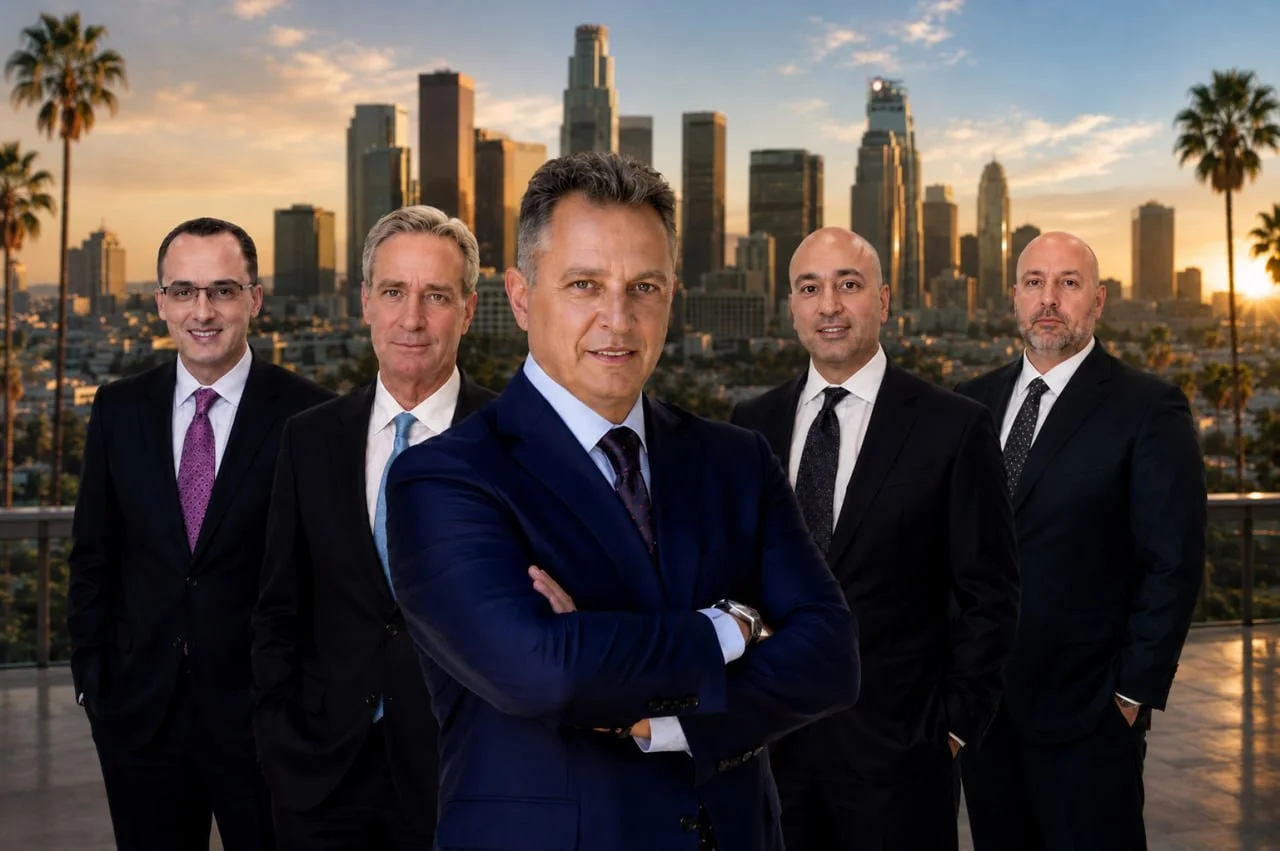
Burg & Brock is a California trial firm. Founding partner Cameron Yadidi Brock opened the doors in 1996 after a stint defending insurance carriers. He switched sides because he saw how they price injured people and decided he’d rather take their money than collect their checks. Three decades later, the firm runs seven offices across the state: Beverly Hills, downtown Los Angeles, Glendale, Riverside, Bakersfield, Fresno, and Sacramento. Our practice is built around car wreck litigation. We handle rear-enders on the 405, head-ons on Highway 1, big-rig crashes on the I-5 grapevine, and rideshare collisions in San Francisco’s Mission. If your case is in a California superior court, we know the judge, the clerks, the local defense panel, and the adjusters who write the checks. Cases run on contingency. You owe nothing until we recover.
California gives crash victims more leverage than most states. Five rights matter most:
Evidence preservation. A 911 call recording disappears after 90 days at most California PSAPs. Surveillance footage from a gas station or storefront overwrites in 7–30 days. We send spoliation letters the day you sign up and dispatch investigators to the scene before the asphalt gets re-striped.
Liability investigation. Police reports get the fault call wrong about a third of the time. We hire accident reconstruction engineers, usually retired CHP MAIT specialists or PhDs from Cal Poly, to walk the scene, pull EDR (black box) data, and run delta-V calculations that contradict the report.
Dealing with insurance. Allstate, State Farm, Geico, Mercury, and Farmers all run Colossus or similar bodily-injury software. The software assigns codes to your diagnoses and pumps out a settlement range. We know which codes get triggered by which diagnoses, and we structure the demand to land at the top of that range, not the bottom.
Medical bills and treatment. We coordinate with med-pay carriers, Medi-Cal, and ERISA plans to stop liens from eating your settlement. For uninsured clients we set up treatment on a lien with orthopedists, pain management groups, and surgical centers that wait to be paid out of the recovery.
Damages calculation. Past meds, future meds, lost wages, lost earning capacity, household services, pain, mental anguish, loss of enjoyment of life. We hire life-care planners and forensic economists when the case justifies it, usually anything over $250K in projected lifetime cost.
Trial preparation. Most firms settle on the courthouse steps because they’ve never tried a case. We file lawsuits as soon as the demand stalls and prep every file for trial from day one. Adjusters check verdict histories. They write bigger checks when they see ours.
| Rear-End | Head-On | T-Bone |
|---|---|---|
| The most common crash in California and the most under-valued. Whiplash and disc injuries get dismissed as “soft tissue.” We use cervical MRI and EMG findings to fight back. | Head-ons happen on Highway 1, on rural two-lanes in the Central Valley, and on the wrong way down freeway off-ramps in LA. Survival rates are low. Damages are high. | Intersection crashes on Wilshire, in Beverly Hills, at the Sepulveda-Santa Monica intersection. We pull signal timing data from Caltrans or city DOT to prove who had the light. |
| Side-Swipe | Multi-Vehicle Pile-Up | Drunk Driver |
|---|---|---|
| Lane-change collisions on the 405 and 101. Insurance usually splits fault 50/50. EDR data and witness statements break the tie. | Tule fog crashes on the 99 and 5. Dust storms in the Inland Empire. Chain-reaction crashes need a careful sequencing analysis to identify the trigger vehicle. | Punitive damages are on the table when the at-fault driver was over .08. Dram-shop liability under Bus. & Prof. Code §25602.1 attaches when a bar served an obviously intoxicated minor. |
| Distracted Driver | Fatigued Driver | Hit-and-Run |
|---|---|---|
| Cell phone records are subpoena-able. We pull them. Texts, calls, and even Snapchat activity at the moment of impact win cases. | Commercial drivers and shift workers nodding off on the I-5 between Bakersfield and LA. ELD logs and Fitbit data show the pattern. | When the driver flees, your uninsured motorist coverage applies. We’ve forced carriers to pay UM on hit-and-runs they tried to deny for lack of physical contact. |
| Uninsured Driver | Rideshare Driver | Commercial Vehicle |
|---|---|---|
| Roughly 17% of California drivers carry no insurance. Your UM coverage steps in. Most policies allow stacking. Most adjusters don’t volunteer that. | Uber and Lyft carry $1M in liability when the driver has a passenger or is on the way to one. We know which phase of the app triggers which coverage. | Trucks, delivery vans, Amazon Flex drivers, construction vehicles. FMCSA regulations create per-se negligence claims that standard auto cases don’t have. |
The Other Driver. The obvious one. Their bodily injury policy pays first, up to its limits.
The Vehicle Owner. Under Veh Code §17150, an owner who lent the car is on the hook up to $15K/$30K. Second policy, second pocket.
The Employer. If the at-fault driver was running an errand for work, respondeat superior puts the employer’s commercial policy in play. Limits run $1M to $5M for most California businesses.
The Manufacturer. Defective tires (Firestone, Cooper), defective airbags (Takata), defective ignition switches (GM), defective autopilot (Tesla). Strict liability under Greenman v. Yuba Power Products.
The Government Entity. Caltrans for a freeway defect. The county for a county road. The city for a city street. Six-month claim deadline under Gov. Code §911.2. Miss it and you’re done.
A Bar or Restaurant. Dram-shop liability is narrow in California (Bus. & Prof. Code §25602.1), but it survives when a licensee served a habitual drunkard or an obviously intoxicated minor.
A Vehicle Maintenance Company. The shop that did the brake job two weeks before the crash. The dealer who skipped the recall notice. The fleet management company that signed off on bald tires.
The Rideshare Platform. Uber and Lyft carry the policy. Period 1 (app on, no ride): $50K/$100K contingent. Period 2 (en route): $1M. Period 3 (passenger in car): $1M. We file directly against the platforms when the driver’s personal coverage denies.
| Economic | Non-Economic | Punitive |
|---|---|---|
| Past medical bills (ER, hospital, surgery, PT, pain management). Future medical care projected by a life-care planner. Lost wages from the date of injury forward. Loss of earning capacity if the injury cuts into your career. Property damage to the vehicle. Out-of-pocket costs: rideshare fares while your car is in the shop, prescription co-pays, mileage to medical appointments. | Pain. Physical suffering. Mental anguish. Anxiety. Depression. PTSD. Loss of enjoyment of life. Disfigurement and scarring. Loss of consortium for a spouse. California has no cap on non-economic damages in auto cases (the MICRA cap applies only to medical malpractice). | Available when the defendant acted with malice, oppression, or fraud under Civ. Code §3294. Drunk driving qualifies (per Taylor v. Superior Court (1979) 24 Cal.3d 890). Street racing qualifies. Fleeing the scene can qualify. Punitives are not insurable. They come from the defendant personally. |
PAST RESULTS DO NOT GUARANTEE FUTURE OUTCOMES. Every case turns on its own facts: injuries, liability, available insurance, venue, and the defendant’s conduct. The ranges below reflect proven outcomes in California auto cases over the last decade and should be read as orientation, not prediction.
| Injury Severity | Typical Settlement Range (California) |
|---|---|
| Soft tissue (whiplash, sprains, no surgery, full recovery in 6–12 weeks) | $15,000 – $50,000 |
| Disc injury with conservative treatment (epidurals, no surgery) | $50,000 – $150,000 |
| Disc injury with surgery (microdiscectomy, fusion, ADR) | $250,000 – $1,000,000+ |
| Traumatic brain injury (concussion through severe TBI) | $500,000 – $5,000,000+ |
| Wrongful death | $1,000,000 – $10,000,000+ depending on dependents, income, and conduct |
A real trial firm. Cameron Brock has tried car cases to verdict in LA Superior, Orange County Superior, Riverside Superior, San Diego Superior, and federal court. Adjusters pull verdict histories. Ours move the dial.
Over $1 billion recovered. Across three decades, across thousands of California cases. Not one mega-verdict propping up the number. A long run of seven- and eight-figure recoveries.
Thirty years on the ground. Founded 1996. Same founding partner. Same office in Beverly Hills since the late nineties. We know the defense panel at Tyson & Mendes, at Manning & Kass, at Lewis Brisbois. We know which adjusters at Mercury and Farmers actually have authority.
Seven California offices. Beverly Hills HQ, downtown LA, Glendale, Riverside, Bakersfield, Fresno, Sacramento. We file cases in the venue that maximizes your verdict, not the one closest to our office.
Contingency fee. Standard 33⅓% pre-litigation, 40% once we file. You pay nothing if we don’t recover. Costs advanced.
Bilingual staff. Spanish, Farsi, Armenian, Russian, Korean. The intake team takes calls in your language. The case manager assigned to you speaks it daily.
You have two years from the date of the crash to file a personal injury lawsuit in California, under Code of Civil Procedure §335.1. Wrongful death follows the same two-year window from the date of death. Claims against a government entity (Caltrans, a city, a county) require a written claim within six months under Gov. Code §911.2. Miss it and your case dies before it starts. Minors get tolled until their 18th birthday, then two more years. If you’re reading this and the crash was a year and ten months ago, stop reading and call. Filing windows are jurisdictional; courts don’t grant extensions for late filers.
California venue rules let you file where the crash happened or where the defendant lives. Burg & Brock files in:
Each venue has its own judicial culture. Riverside jurors run conservative on damages but punitive on conduct. San Francisco jurors hand out larger pain-and-suffering awards. LA jurors fall in the middle but trend higher in Mosk than in the outlying district courthouses. We pick the venue that fits your facts.
Talk to a California car accident lawyer today. Free case evaluation. (310) 906-4862. Available 24/7. Hospital visits across the state.
1. How much does it cost to hire Burg & Brock for a California car accident case? Nothing up front. We work on contingency: 33⅓% of the recovery if we settle before filing a lawsuit, 40% if litigation is necessary. Costs (filing fees, deposition transcripts, expert witnesses, medical record retrieval) are advanced by the firm and reimbursed out of the recovery at the end. If we don’t recover money for you, you pay nothing: no fee, no costs, no bills. The fee structure is laid out in writing in the retainer agreement and is governed by California Business & Professions Code §6147, which requires plain-English disclosure and a client signature.
2. How long do I have to file a car accident lawsuit in California? Two years from the date of the crash for personal injury, under CCP §335.1. Two years from the date of death for wrongful death. Six months for a claim against a government entity (Caltrans, a city, a county). Property damage only is three years. The clock runs strictly; courts almost never extend these deadlines. If a minor was injured, the two-year personal-injury clock tolls until they turn 18. If the defendant fled the state, the clock can toll for the time they were absent. Call early; don’t burn the clock.
3. What if the at-fault driver had no insurance or fled the scene? Your own uninsured motorist (UM) coverage applies. California requires carriers to offer UM at the same limits as your liability policy unless you signed a written waiver. UM covers hit-and-run as long as you report the crash to police within 24 hours and to your insurer within 30 days. We’ve handled hundreds of UM claims, including arbitrations against State Farm, Allstate, Mercury, Farmers, AAA, and Wawanesa. UM cases follow a different procedural track than third-party cases; the carrier will fight harder than a stranger’s insurer because they’re paying their own insured.
4. Will my car accident case go to trial? Probably not. Roughly 95% of California auto cases settle before trial. But we prepare every file as if it will. Carriers track which firms try cases and which don’t. Firms that settle 100% of the time get lowball offers; firms with verdict histories get fair offers. We’ve tried cases to verdict in LA, Orange County, Riverside, San Diego, and federal court. That track record translates directly into settlement value on the cases that never see a jury.
5. What if I was partly at fault for the crash? You can still recover. California uses pure comparative fault: your recovery is reduced by your percentage of fault, but you collect the rest. Even if a jury finds you 90% at fault, you collect 10% of the damages. Texas, Florida, and most other states bar recovery once you cross 50%. California does not. Insurance carriers often try to inflate your share of fault. We push back with reconstruction experts, witness statements, and the EDR data from the vehicles.
6. Do I have to give a statement to the other driver’s insurance company? No. And you shouldn’t. The other driver’s adjuster will call within 48 hours of the crash and ask for a recorded statement. They are not your friend. They are building a file to minimize your claim. Politely decline and refer them to us. You do owe your own carrier cooperation under the policy, but even there, route the call through your lawyer once you have one. Statements made early, in pain, on medication, will be used against you later.
7. What if my injuries didn’t show up until days after the crash? This is normal. Whiplash, concussion, disc injuries, and soft-tissue trauma often present 24 to 72 hours after impact when the adrenaline wears off. Insurance carriers love to argue “delayed onset means the injury isn’t from the crash.” It doesn’t, and the medical literature backs us up. Get to a doctor as soon as symptoms appear. The first medical record creates the timeline that ties the injury to the crash. We’ve won six- and seven-figure verdicts on cases where the client first sought treatment days after the wreck.
8. How long will my case take? Pre-litigation settlement: 6 to 12 months from intake to check, depending on how long you treat. Litigated cases: 18 to 36 months from filing to resolution. Cases that go all the way to verdict can run 2 to 3 years. The biggest variable is your medical treatment. We don’t send a demand until you’ve reached maximal medical improvement, because settling early on an unresolved injury locks in too low a number. If you need surgery, the case waits for the surgery.
9. What if I was in a rideshare crash (Uber, Lyft, DoorDash, Instacart)? Coverage depends on the app’s status at the moment of impact. App off: the driver’s personal policy applies. App on, no ride accepted: Uber/Lyft carry $50K bodily injury / $100K per incident contingent coverage. En route to pick up or with a passenger in the car: $1 million in third-party liability plus $1 million in UM/UIM. We pull the trip records directly from Uber and Lyft to prove which phase applied. Delivery apps (DoorDash, Instacart, Amazon Flex) have similar tiered structures, but the policy limits and the willingness to pay vary widely.
10. What if a commercial truck or big rig hit me? Commercial trucking cases follow different rules than passenger auto cases. The trucking company is subject to the Federal Motor Carrier Safety Regulations (FMCSA), which set rules for hours of service, driver qualifications, drug testing, and equipment maintenance. Violations create per-se negligence claims. Black box (ECM) data, driver logs (now electronic, called ELD), and post-crash drug tests are all discoverable. Trucking insurance policies usually run $750K to $5M depending on cargo and route. We move fast on truck cases because evidence, ELD records in particular, gets overwritten or destroyed without a prompt preservation letter.
11. Can I sue if a family member died in a California car crash? Yes. California’s wrongful death statute (CCP §377.60) allows a surviving spouse, domestic partner, children, or other dependents to bring a wrongful death claim. Damages include funeral and burial expenses, loss of financial support (the decedent’s projected lifetime earnings), loss of household services, loss of companionship and society, and loss of moral support and guidance. Separately, a “survival action” under CCP §377.30 lets the estate recover for the decedent’s pre-death pain and suffering and lost wages between injury and death. Two-year statute of limitations from the date of death.
12. Why hire Burg & Brock over a high-volume settlement mill? The high-volume firms you see on the bus benches and billboards run cases on a conveyor belt. They settle fast, take the fee, and move on. Carriers know this. They offer those firms pennies on the dollar because the firms can’t or won’t try cases. We’re different: smaller caseload per attorney, real trial experience, no rush to close. Our cases settle for more because the carrier knows what happens if we file. If you want a quick check that pays your deductible and walks away, hire one of the volume firms. If you want the full value of the case, call us.

By Cameron Yadidi Brock, Founding Attorney · California State Bar #183112 · Reviewed May 28, 2026
Cameron founded Burg & Brock in 1996 after several years defending insurance carriers. He has tried car accident, trucking, and catastrophic injury cases to verdict in superior courts across California and in federal court. UCLA undergrad, Loyola Law School JD. Member of the Consumer Attorneys of California and the Consumer Attorneys Association of Los Angeles. Verify the bar license at calbar.ca.gov.
Don’t wait. Evidence disappears. The two-year statute runs whether you file or not. The carrier already has a file open on your case. You need one too. Call (310) 906-4862 right now for a free consultation with a California car accident lawyer. Hospital visits available. Spanish, Farsi, Armenian, Russian, Korean. No fee unless we recover.
Choose which categories of cookies and tracking technologies you allow on burgbrock.com. Strictly necessary cookies are always on so the site can function.
Required for the site to load, keep you signed in, and remember your preference choice. Always active.
Lets us see which pages people visit so we can improve the site. No personal data is sold.
Allows ad partners to measure the performance of ads you may have seen and show more relevant ads.
Powers extras like chat, embedded video, and remembered form fields. Turning these off may break some features.