Disclaimer: This content is provided for informational purposes only and does not constitute legal advice or a guarantee of results. The information presented is not intended to create, and receipt or viewing does not establish, an attorney-client relationship. Every case is different, and outcomes depend on the specific facts and circumstances involved. For advice regarding your individual situation, you should consult a qualified attorney.
Immediately after a truck accident, prioritize safety by checking for injuries and moving to a safe spot, then call 911 to report the crash and get medical help, even for minor issues. Document everything with photos, get witness info, exchange details with the truck driver (license, insurance, company), and critically, do not admit fault or post on social media, as this can harm your case; then, contact a lawyer due to the complexities of trucking accidents.
Burg & Brock is a trial-focused personal injury law firm with over 30 years of combined experience, committed to guiding clients through complex, high-stakes injury cases with clarity, discipline, and determined advocacy. Our seasoned truck accident lawyers have helped several clients/individuals and families to navigate life-altering legal challenges by simplifying the otherwise complex process. Call us now for a free case review.
This article provides detailed information about the immediate action to be taken after a truck accident. It also explains the steps involved in documenting a truck accident and also outlines the legal rights of a truck accident victim, including ways a truck accident lawyer can help your case.
The moments after a truck accident can feel overwhelming, but what you do next plays a major role in protecting your well-being, preserving evidence from the entire accident scene, and safeguarding your legal rights. Below are the critical immediate actions to take after being involved in a truck accident:
“After a truck accident, your first priority must always be your safety and health,” says Cameroon Yadidi Brock. “Even when injuries are not immediately visible, seeking medical attention and documenting the accident scene can make a critical difference in both your physical recovery and your ability to pursue fair compensation later.”
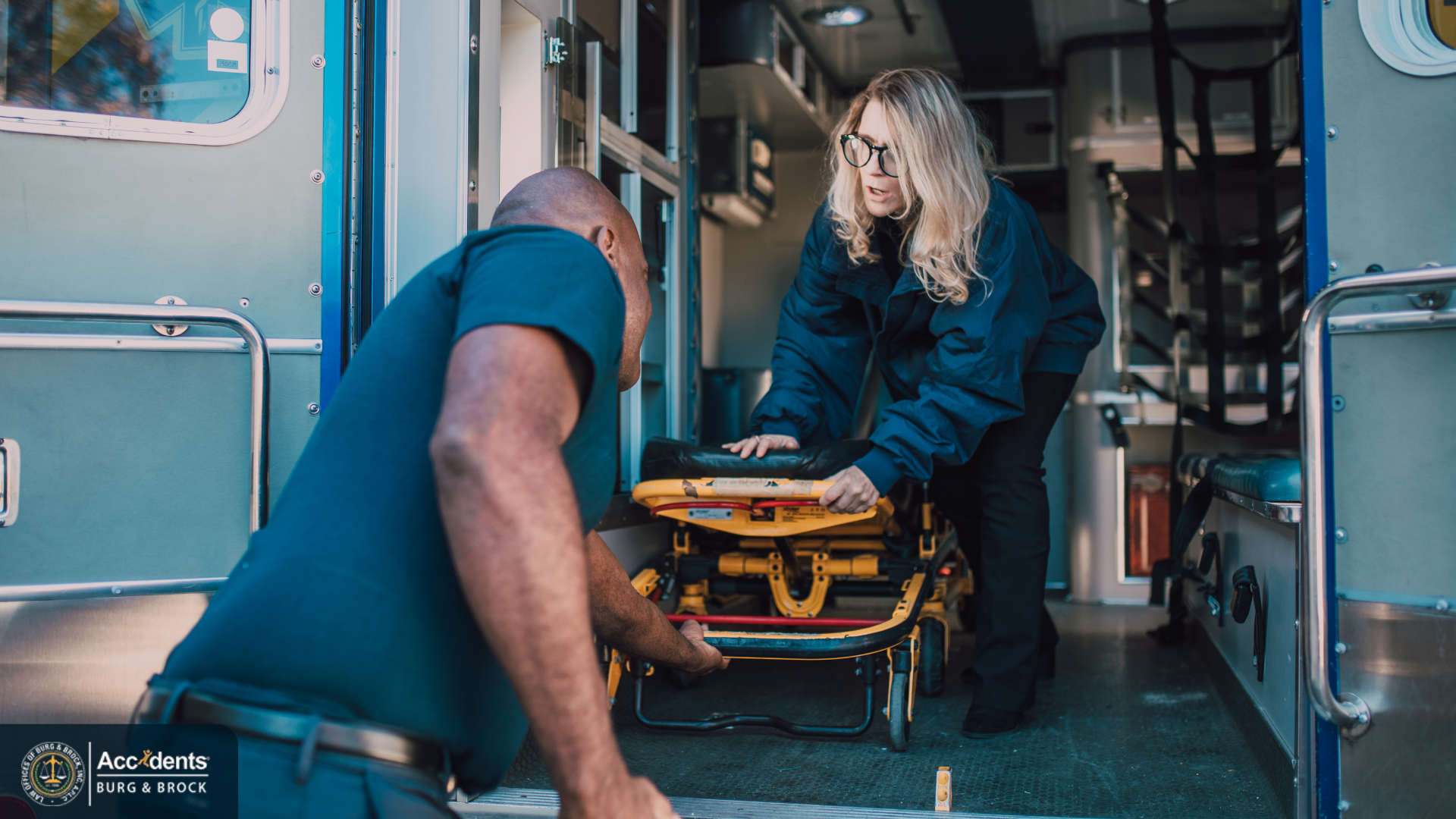
In our experience, ensuring safety and seeking medical attention immediately after a serious incident, especially a truck accident are the two most important actions you can take. Before worrying about insurance claims or legal steps, protecting your health and well-being must come first. Safety is fundamentally about preserving life and preventing additional harm, and medical care plays a critical role in identifying injuries that may not be obvious right away.
We recommend focusing first on getting yourself and others out of immediate danger if it is safe to do so. According to the Centers for Disease Control and Prevention (CDC), unintentional injuries are one of the leading causes of death in the United States, resulting in over 200,000 deaths each year, with motor vehicle accidents among the most significant contributors. Taking simple safety steps such as moving to a safe location, using hazard lights, and calling emergency services, can significantly reduce the risk of further injury.
In some cases, such as when there are severe injuries, fire hazards, or heavy traffic, it may be safer to remain where you are and wait for emergency responders. For instance, if someone is unconscious or appears to have spinal injuries, moving them could cause more harm. In those situations, we recommend securing the area as best you can and allowing trained professionals to step in.
Safety also extends beyond physical protection. The psychological impact of a traumatic event is often underestimated. The National Institute of Mental Health (NIMH) reports that exposure to traumatic incidents significantly increases the risk of anxiety disorders and post-traumatic stress disorder (PTSD), particularly when individuals do not feel safe or supported afterward. In our work, we’ve seen clients who appeared physically uninjured but later struggled emotionally because the trauma was never properly addressed.
Seeking medical attention as soon as possible is equally critical. We always recommend being evaluated by medical professionals even if you believe you are “okay.” Adrenaline can mask serious injuries such as concussions, internal bleeding, or soft-tissue damage. The National Institutes of Health (NIH) emphasizes that early diagnosis and treatment significantly improve outcomes for traumatic injuries and reduce the risk of long-term complications.
For example, we’ve worked with individuals who declined medical care at the scene, only to discover days later that they had suffered a head injury or internal trauma. By then, recovery was more difficult, and treatment was more complex. Seeking care early not only protects your health but also creates a clear medical record that documents when and how injuries occurred.
In some cases, ongoing care may be necessary, and it depends on the nature of the injury and the person’s overall health. The CDC notes that untreated injuries and poorly managed conditions can lead to infections, chronic pain, or permanent disability. Prompt medical intervention helps prevent these outcomes and supports a safer, more complete recovery.

Often, we always tell clients: the more accurate and detailed information you gather early on, the better protected your legal rights will be later.
It depends, of course, on your condition and the severity of the crash. If you’ve suffered severe injuries, your priority should always be to seek medical attention and accept medical assistance from emergency services or ambulance service. But if your health allows, here’s how we recommend documenting the entire accident scene step by step.
At the scene of a truck accident, the types of evidence to gather are mainly physical documentation of the scene, information from involved parties and witnesses, and official reports. This evidence helps establish fault and supports your claim for damages.
Information to gather at the scene of the accident include contact and insurance details from all involved drivers and also their names, addresses, driver’s license numbers, plate numbers and insurance company name and contact information. You should also collect the trucking company details, including the company name visible on the truck/trailer, USDOT number, and motor carrier number.
Witness information is also one of the vital details you need to collect, including names and contact details from any bystanders who saw the accident. In addition, you need to take photographs and video footage of the entire scene from multiple angles, capturing vehicle damage and final resting positions, skid marks, debris, and any damaged guardrails or signs. You can also capture road conditions (potholes, water, ice), weather, and lighting, traffic signs, signals, or relevant road markings. Also, you need to take pictures of any visible injuries sustained by yourself or others.
Maintaining detailed records post-accident is crucial for protecting your rights, supporting insurance claims and legal action, and ensuring proper medical treatment and financial recovery. The key reasons for maintaining detailed records post-accident include establishing causation and liability by creating a direct link between the accident and the injuries and damages sustained. This makes it difficult for other parties or insurance companies to dispute their involvement or deny the claim.
Having a detailed record also post-accident supports insurance and legal claims. Comprehensive records serve as concrete evidence when dealing with insurance adjusters or in a court setting. They provide a factual basis for the compensation you seek for medical bills, lost wages, and pain and suffering, which can prevent low settlement offers or claim denials. It also ensures proper medical treatment and recovery. Because Medical records ensure continuity of care, allowing healthcare providers to make informed decisions about your treatment plan. Prompt documentation helps identify injuries with delayed symptoms and track your recovery progress over time.
“Detailed records are often what separate a strong claim from a weak one,” says Craig Rackohn, one of our attorneys. “Medical records, accident documentation, and proof of financial losses create a clear narrative that links the accident to the injuries and damages suffered, making it far more difficult for insurance companies to dispute liability or undervalue a claim.”
Furthermore, maintaining records helps to quantify damages and losses. This means that accurate records help calculate both economic damages (e.g., medical expenses, property damage, lost income) and non-economic damages (e.g., pain and suffering, emotional distress). This ensures all costs associated with the accident are accounted for. Meticulous, organized records also enhances credibility because they demonstrate transparency and help build credibility in the eyes of insurance companies, legal professionals, and courts. Inaccuracies or gaps in documentation can be used by the opposing party to cast doubt on your claims.
A truck accident case is very different from a typical car accident or auto accident because it often involves a commercial truck, trucking companies, multiple parties, and aggressive insurance companies. The table below breaks down your key legal rights, along with what they mean in real life.
| Your Legal Right | What This Means in Practice |
|---|---|
| Right to Seek Medical Attention | You have the right to seek medical attention and medical treatment immediately after the accident happened. In fact, we recommend you do so even if injuries seem minor, as delayed symptoms are common after a truck crash or truck wreck. Medical records also protect your claim by linking injuries to the accident. |
| Right to Call Emergency Services | You are entitled to request medical assistance, ambulance service, and law enforcement at the accident scene. Police officers will document the entire accident scene and prepare a police report or accident report, which is critical for insurance claims and the legal process. |
| Right to Gather Evidence | If your well-being allows, you have the right to gather evidence and collect evidence at the scene. This includes photos of vehicles involved, vehicle damage, license plates, road conditions, traffic signals, and property damage. In our experience, having as much evidence as possible helps prevent disputes later. |
| Right to Exchange Information | You have the right to exchange information with the parties involved, including the truck driver and other drivers. This includes names, phone numbers, insurance information, and driver’s license numbers for future reference. |
| Right to Avoid Insurance Adjusters | You are not required to give recorded statements to insurance adjusters or the trucking company’s insurance company. We often advise clients to wait until they’ve spoken with a truck accident lawyer, as early statements can be used to reduce or deny insurance claims. |
| Right to File a Personal Injury Claim | If you suffered sustained injuries, lost wages, or other losses, you have the right to file a personal injury claim or truck accident claims against the responsible parties. This applies whether the accident involved one vehicle or multiple parties. |
| Right to Fair Compensation | You have the legal right to seek compensation for medical expenses, future care, lost wages, pain and suffering, and emotional distress. The goal is a fair settlement or fair compensation that reflects the true impact of the accident resulted. |
| Right to Hold All Liable Parties Accountable | Truck accidents often involve more than just the driver. You may pursue claims against trucking companies, vehicle owners, or other responsible entities involved in the accident. It depends on who contributed to the crash. |
| Right to Legal Representation | You have the right to hire experienced truck accident attorneys to guide you through this complex process. A truck accident lawyer helps protect your legal rights, handle the claims process, and pursue financial recovery on your behalf. |
| Right to a Free Consultation | Most experienced truck accident attorneys offer a free consultation and work on a contingency fee basis, meaning you don’t pay unless compensation is recovered. This allows truck wreck victims to focus on healing without upfront legal costs. |

Hiring a truck accident lawyer provides crucial expertise in complex federal/state trucking laws, handles investigations (evidence, black box data), identifies all liable parties (driver, company, manufacturer), and manages negotiations with aggressive insurers, ensuring victims focus on recovery while securing comprehensive compensation for medical bills, lost wages, and pain & suffering, preventing low settlements, and building a strong case with specialists if needed.
Roles of a truck accident lawyer include investigation and evidence gathering. A truck accident lawyer Collects police reports, black box data, driver logs (HOS), accident scene photos, and interviews witnesses, often hiring experts like accident reconstructionists. Determining liability is also a major role of a truck accident lawyer. The lawyer identifies all responsible parties, including drivers, trucking companies, maintenance providers, cargo loaders, or manufacturers, holding them accountable.
In addition, a truck accident lawyer navigates regulations, understands complex FMCSA rules (hours of service, maintenance, driver qualifications) that often lead to violations and negligence. An accident lawyer also handles the negotiation with the insurance companies, and provides legal representation by filing paperwork, managing deadlines, and representing clients in court if a settlement isn’t reached.
Benefits of hiring a truck accident lawyer include expertise in complex laws as they provide Specialized knowledge of trucking regulations sets them apart from standard car accident lawyers. Hiring a truck accident lawyer will also greatly improve your chances of getting fair, comprehensive settlement. This also helps to prevent lowball offers, which means a lawyer Stops insurers from taking advantage of victims with quick, inadequate settlement offers. An accident lawyer also helps to identify all liable parties and ensures claims against multiple defendants (driver, company, owner) are pursued for greater compensation, according to this legal blog post and this other source.
Filing insurance and legal claims requires careful documentation and following specific procedures. Generally, you should understand your policy/legal position, document all details, notify the relevant parties promptly, and be prepared for potential negotiation or formal dispute resolution. The steps involved in filing an insurance claim include reviewing your policy to understand your coverage, deductibles, and exclusions to determine if your loss is covered. The second step is to report the incident promptly, which involves notifying your insurer immediately after the incident. The next step, and the most vital step, is to document everything. You need to gather evidence by taking photos and videos of the damage, police reports, medical records, and receipts.
It is important that you complete the claim form provided by your insurer with the accurate details required. Also, you need to cooperate with the loss adjuster assigned by the insurance company to assess the damage and determine the claim payout. Provide all the requested documentation and access to the damage. You should also review the settlement offer carefully to ensure it fairly compensates your losses based on your policy's terms. You can negotiate if the offer is unsatisfactory. Finally, you can appeal if your claim is denied.
To deal with insurance adjusters and protect your rights, be polite but cautious, stick strictly to basic facts, never admit fault, avoid recorded statements or signing documents without legal review, document everything meticulously (especially medical care and communication), and consult a personal injury lawyer before providing detailed information or accepting offers, as adjusters work for the insurer, not you, and may offer low settlements to close the case quickly.
When interacting with insurance companies post-accident, the primary strategies are thorough documentation, cautious communication, and careful negotiation. Remember that the insurance adjuster's primary goal is to minimize company payouts, not maximize your compensation. Some guidelines to keep in mind when interacting with insurance companies include declining recorded statements, and never admit fault or say anything that could be interpreted as accepting blame, even a simple "I'm sorry". Fault determination is part of the investigation process.
You should remember to avoid admitting fault or say anything that could be interpreted as accepting blame, even a simple "I'm sorry". Fault determination is part of the investigation process. It is important that you limit personal information, only provide basic information like your name, contact details, and policy number. Do not provide a social security number or detailed information about your job or income unless required by law or a lawyer advises you to. Lastly, you have to be cautious with injury details and Avoid downplaying your injuries (e.g., saying "I'm fine") or discussing them in detail until you have a full medical evaluation, as injuries may appear later
“In our experience, insurance adjusters are trained to gather information that limits what a company ultimately pays,” says Cameroon Yadidi. “We always advise clients to avoid recorded statements, limit what they share, and never comment on fault or injuries until a full medical evaluation and legal review have taken place. Even well-intentioned remarks can be misinterpreted and used against you later.”
Some very helpful negotiation tactics include knowing your claim value. You can use your documentation to determine a fair value for your claim, including current and future medical expenses, lost wages, and property damage. Another important tactic is to never accept the first offer. Initial settlement offers are typically low. Politely decline the offer and state that you are still assessing the full extent of your damages or need to consult with your attorney.
Most importantly, consult legal counsel when needed. Do not try to go through all of the procedures involved in filing an injury claim by yourself to avoid a poorly executed negotiation and as a result, a lost claim or a very poor compensation.
One of the biggest challenges is serious and long-term injuries. According to data from the Centers for Disease Control and Prevention (CDC), motor vehicle crashes result in millions of emergency department visits each year, and crashes involving large trucks are significantly more likely to cause severe injuries or fatalities due to the size and weight of the vehicles involved. In practice, this means many people require extensive medical treatment, ongoing rehabilitation, and long-term follow-up care. We’ve seen clients who felt “okay” at first, only to later discover spinal injuries or traumatic brain injuries that required months of treatment and mounting medical expenses.
Another major challenge is delayed or disputed insurance claims. It’s important to remember that an insurance company is focused on limiting payouts, not maximizing your recovery. Studies and industry data show that injury victims without legal representation often receive significantly lower settlements than those who seek professional help. In our experience, insurance adjusters may question the severity of injuries, dispute liability, or delay the claims process, all of which can slow down financial recovery and increase stress for truck wreck victims.
Determining fault is also far more complicated in a truck crash. It depends on many factors, including driver behavior, vehicle maintenance, loading practices, and regulatory compliance. Unlike a simple accident between two cars, truck accidents may involve multiple parties, such as the truck driver, the trucking company, maintenance contractors, or even manufacturers. This complexity often leads to longer investigations, conflicting accounts, and challenges in proving liability, especially if evidence from the entire accident scene is not preserved early.
Lost income and financial strain present another significant hurdle. Data from federal transportation and labor studies consistently show that injury-related absences from work can result in thousands of dollars in lost wages within just a few weeks. For many people, being unable to work while dealing with medical records, appointments, and recovery creates immediate financial pressure. In some cases, injuries permanently limit a person’s ability to return to their previous job, making long-term compensation even more critical.
Emotional and psychological impacts are also common and often underestimated. Research from federal health agencies indicates that individuals involved in serious vehicle accidents face a higher risk of anxiety, depression, and post-traumatic stress symptoms. We’ve worked with clients who struggled to drive again or experienced ongoing fear and sleep disturbances long after the accident happened. These non-economic damages, while harder to quantify, are very real and deserve recognition.
Finally, navigating the legal process itself can be overwhelming. Truck accident cases are a complex process involving strict deadlines, extensive documentation, and aggressive defense tactics. Without guidance from experienced truck accident attorneys, many victims don’t realize what compensation they’re entitled to or how to effectively seek compensation for both current and future losses.
This article provides the much-needed insight to a truck accident and how to navigate the process that follows afterwards. It clearly states the importance of documenting evidence at the scene of the incident and avoiding any form of admission of guilt. This article also explains the common challenges faced by a truck accident victim and the benefits of hiring and working with a truck accident lawyer instead of trying to navigate the entire process alone while still in recovery from your injuries.
With a collective experience of 30 years and more than 20,000 cases won, our team of expert truck accident lawyers at Burg & Brock will help you handle every aspect of the filing, evidence gathering, negotiation and if necessary the trial of your truck accident injury claim to ensure you get the best possible outcome. Take the first step towards justice by seeking expert legal assistance. Reach out to us today and let us work together to ensure your future safety and well-being.
These frequently asked questions address the most common concerns we see from truck accident victims and highlight practical steps to protect your health, finances, and legal rights.
After a truck accident, remain calm, move to a safe location if possible, turn on hazard lights, and call emergency services to request medical assistance and police officers at the accident scene. We recommend you seek medical attention, gather as much evidence as you safely can, exchange insurance information, and contact a truck accident lawyer for guidance.
To report a truck crash, call 911 immediately so police officers can respond, secure the entire accident scene, and create an official police report or accident report. This report is essential for insurance claims, determining fault among multiple parties, and supporting a future personal injury claim.
The costs after a truck wreck can include medical expenses, ongoing medical treatment, vehicle repair or property damage, and lost wages from time off work. In some cases, long-term care and reduced earning capacity increase the need to seek fair compensation and financial recovery through truck accident claims.
Common mistakes include failing to seek medical treatment, giving recorded statements to insurance adjusters, or admitting fault at the scene. We recommend limiting communication with the insurance company, documenting everything, and speaking with experienced truck accident attorneys early to avoid harming your case.

Cameron Brock is a recognized personal injury lawyer in Los Angeles with extensive experience and success representing individuals and families in catastrophic personal injury and wrongful death cases.
Cameron’s proven track record of helping those who have been harmed by wrongful conduct, violations of safety rules, and defective products has focused on claims involving automotive product defect, tire product defect, commercial truck accidents, trash truck accidents, airplane and helicopter crashes, train disaster, government liability for dangerous condition of public property, and general negligence.
Read more about Cameron BrockWe turn your pain into payouts. No stress, no upfront fees—just real results when you need them most.